
![Iraq Parliament in Baghdad, Iraq on October 13, 2022. [Iraqi Parliament Press Office - Anadolu Agency]](https://i0.wp.com/www.middleeastmonitor.com/wp-content/uploads/2022/10/AA-20221013-29148969-29148960-IRAQI_PARLIAMENT_BEGINS_VOTE_TO_CHOOSE_NEW_PRESIDENT.jpg?fit=920%2C613&ssl=1)
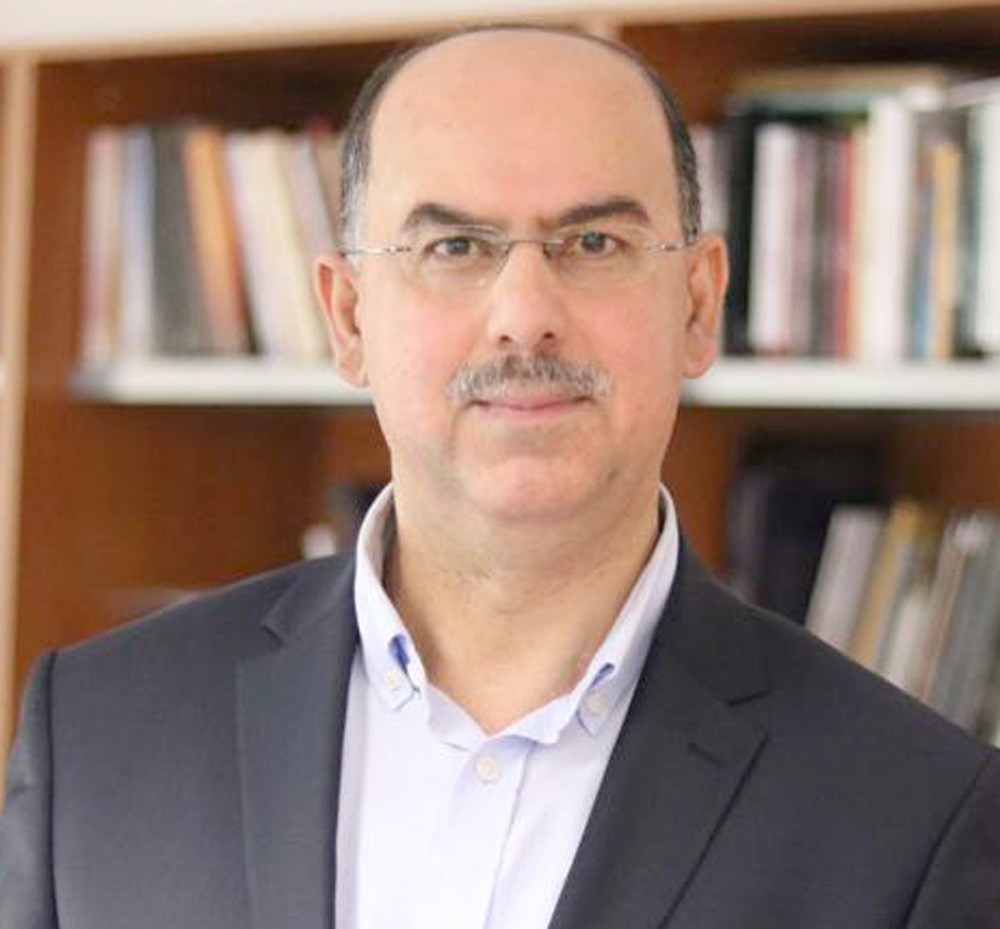
The selection of Haybat al-Halbousi as Speaker of Parliament was not a meaningful political event. Rather, it was a stark reminder of the profound political illiteracy that has governed Iraq since 2003. Al-Halbousi did not emerge as a statesman or a visionary figure with expertise. He arrived as a minor clause in a bargain of mutual interests among sectarian parties that divide the state’s institutions as if they were spoils of war. Iraqis thus find themselves facing a familiar situation once again: different faces, but the same structural decay — a state run by quotas, not institutions.
Al-Halbousi, a relative of former Speaker Mohammed al-Halbousi, was not presented to the Iraqi people as a public figure with a programme or project. Instead, he was introduced as a ‘sectarian counterpart’, a piece needed to complete the power-balancing mosaic engineered by the ruling parties. His rise reflects not the will of voters, but that of a system which does not permit the emergence of statesmen, but rather sectarian functionaries who perform their allotted role before exiting the stage.
The clearest example of this mindset came when al-Halbousi, as head of the Oil and Gas Committee, proposed that the government sell fuel coupons to citizens in order to withdraw cash stored in homes. This was not an economic vision, but rather a display of political and cultural illiteracy that treats the state as a shop and citizens as customers. In a country where people refuse to deposit their savings in banks due to a total collapse of trust in the state, governance cannot be conducted through coupons. What Iraq needs is the rebuilding of trust — something far removed from the priorities of the ruling class.
While not the worst figure in the political landscape, the new al-Halbousi is one of its recurring faces, summoned to complete a sectarian tableau that has crushed the very idea of ‘Iraqiness’. Even the people of Anbar, whom he is supposed to represent, do not expect much from him. He is simply too weak to address their most pressing concerns. The case of those forcibly disappeared, for example, is not just a political file; it is an open wound. A report by the International Committee of the Red Cross described the families of the disappeared as bearing “an open wound”. Yet these families continue to hold up photos of their missing loved ones amid official silence and deliberate neglect. Opening this file would require confronting the forces that control it — forces that no Speaker of Parliament dares to challenge.
The same applies to the case of Jurf al-Sakhar, where thousands of displaced residents live in camps lacking basic amenities while their land remains under the control of powerful militias. Can the new Speaker approach this issue? Iraqis know the answer even before the question is asked. Addressing such issues requires state authority, not merely the authority of a position — and state authority in Iraq today lies outside parliament.
The question everyone avoids is this: Why does nothing change in Iraq despite the constant change of faces? The answer is simple and painful: the faces change within a fixed structure — a structure designed to perpetuate failure. No speaker can open a real file, no government can confront the militias and no judiciary can impose its authority. Everything moves in a closed circle and every ‘change’ is merely the recycling of the same old names.
Parliament itself is no longer a legislative authority. It has become a mere recorder of decisions made elsewhere. Electing a new Speaker will not change Parliament’s function, nor the nature of the forces that control it. Like those before him, Haybat al-Halbousi is entering a paralysed institution — one that is incapable of legislating or overseeing, and is only capable of granting legitimacy to decisions made outside its walls.
In this context, the selection of Haybat al-Halbousi does not offer a solution to any of Iraq’s crises. Rather, it is the natural continuation of a decaying political scene that repeats itself with different faces but identical outcomes. Iraq does not need new sectarian equations; it needs a state. A state cannot be built through bargains, coupons or sectarian balancing acts. It can only be built through political will, which has been absent for two decades.
The real question, then, is not whether the new Speaker will succeed. Rather, it is whether any Speaker can succeed in a system designed to prevent success. This is the question that must be asked — and the one that everyone continues to avoid.
The views expressed in this article belong to the author and do not necessarily reflect the editorial policy of Middle East Monitor.
 Unless otherwise stated in the article above, this work by Middle East Monitor is licensed under a Creative Commons Attribution-NonCommercial-ShareAlike 4.0 International License. If the image(s) bear our credit, this license also applies to them. What does that mean? For other permissions, please contact us.
Spotted an error on this page? Let us know
Latest news
See all


