

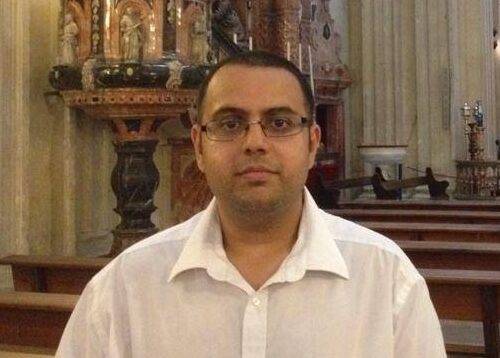
The Tavistock Clinic in London, which was set up in the aftermath of the First World War, is one of the UK’s leading mental health institutions. Offering outpatient therapeutic services to children and adults facing a range of challenges as well as training mental health professionals, the clinic has a long history of dealing with serious problems. However, after the 7th October 2023 Hamas attack and Israel’s genocidal war in Gaza, communities in the UK whether Muslim or Jewish had to grapple with the consequences of it. There was also a feeling that different sides struggled to talk to one another and that facilitating understanding between the communities was something few wished to host. Those who are involved in the clinic decided to take it upon themselves to have these discussions and this book How do we even talk about Palestine and Israel: one group’s experience in unspoken territory is a result of these interactions.
On the surface, the narratives between different groups seem irreconcilable, as Nadia Dabbagh says in her essay on what being a Palestinian means to her; ‘being Palestinian is a feeling that the world is imbalanced. Like a chair with a wobbly or broken leg on which you can never quite sit right or sit with any comfort or ease.’ Dabbagh goes through the history of trauma in her family and among Palestinians, her initial reaction to 7th October is to say she abhors violence and she forces herself to watch videos from that day, but also pleads with people to not start their understanding of history on that day, but to understand and condemn the conditions that led to the creation of Hamas’ attack. Dabbagh suggested to the WhatsApp group of people involved with the clinic that people should write about grief, love, attachment and the cycle of trauma and violence in the context of Israel/Palestine. However, she was greeted with silence and so she posted a video of Palestinian poet Mohammad El-Kurd reciting the poem ‘this is why we dance’ with footage of him as a boy as his home was taken by Israeli settlers. The video provoked a reaction with some of the Jewish members feeling uncomfortable as Sarah Wynick expressed; ‘I am a Jew, as are many people on this group, and I find that even though I fundamentally disagree with Israeli government’s actions, films like this arouse lots of complicated feelings which I don’t want to be ambushed by this setting.’
Indeed, in Sarah Wynick’s chapter on rethinking her Jewish identity, where she delves into her inner conflict between how her parents raised her to think about the world versus how she chose to see the world around her. A few days after 7th October, a Catholic friend reached out to her to apologise for her silence and expressed her horror at the attack. Wynick’s initial reaction to her friend was that during the few days of silence, she imagined that her friend believed that Jewish people deserved to be massacred. This feeling surprised Wynick as she tended to believe that the idea that anyone who wasn’t Jewish is antisemitic, as her parents believed, was fundamentally wrong and refused to accept. ‘I hadn’t expected my own reaction. But it came from somewhere deep, somewhere familiar.’ This psychological conflict that is rooted in the trauma of her family, plays out when it comes to Palestinians. While she moved away from many of her parents’ beliefs, tending to identify with more left-leaning politics, supporting a two-state solution and being aware of the poor treatment of Palestinians. But the attack brought out feelings of being isolated from non-Jews that even the Tavistock Group, Wynick felt Israel was being singled out as the sole villain. When discussing the 1948 Nakba, she writes, ‘At a purely practical level, I find it difficult to believe that the fledgling IDF, fighting multiple armies simultaneously, had the capacity to systematically expel 700,000 people [The Palestinians]. More likely, as in most wars, civilians fled because they were afraid.’
While different contributors to the volume express different views, on the surface level Wynick and Dabbagh’s narratives are irreconcilable. While both agree that this didn’t start in 2023 and has roots in 1948, the difference in how they understood how it unfolded and the moral responsibility that flows from this, does suggest that the gulf between the two is perhaps too wide to bridge. But the purpose of the book as well as the group is to equip people with the understanding of how the other side thinks and feels. Why one event can be read in many different ways depending on someone’s positionality, psychological and social makeup. Gaps between communities and individuals can’t start to be healed until a frank conversation takes place, the utility of doing this depends on your approach to this therapeutic method. What How do we even talk does offer is a layout as to what this dialogue looks like, but it is for the reader to determine whether this is worth pursuing.
 Unless otherwise stated in the article above, this work by Middle East Monitor is licensed under a Creative Commons Attribution-NonCommercial-ShareAlike 4.0 International License. If the image(s) bear our credit, this license also applies to them. What does that mean? For other permissions, please contact us.
Spotted an error on this page? Let us know
Latest news
See all


