
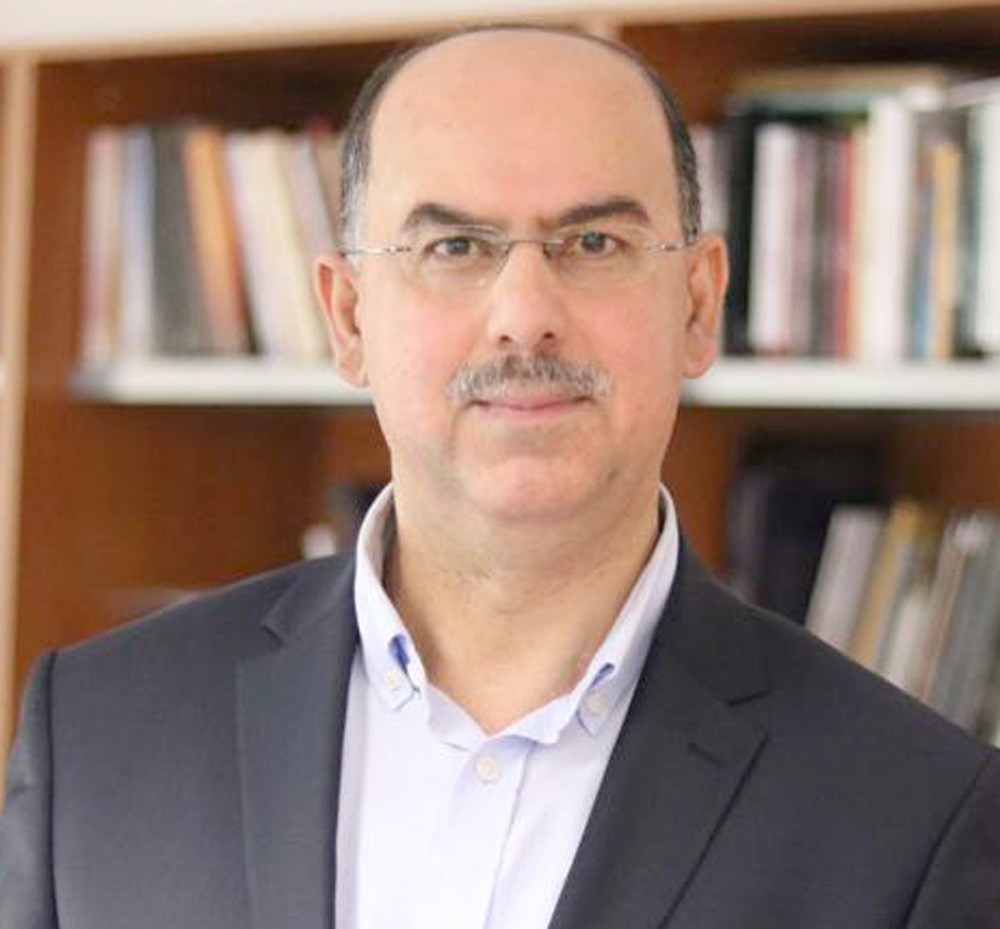
![Syrian actress Rouzaina Lazkani. [Instagram/@rouzainalazkani_]](https://i0.wp.com/www.middleeastmonitor.com/wp-content/uploads/2026/07/images-1-1.jpg?fit=920%2C613&ssl=1)
I did not regret missing Rouzaina Lazkani’s television work as much as I regretted discovering—too late—that Syria had been hiding its true face in a place we had not looked closely enough. Rouzaina, chosen by President Ahmad al‑Shar’a as part of the complementary third of the People’s Assembly, is not merely an actress stepping into politics. She is a distilled image of a Syria trying to break free from the era of rigid interpretations and step into the era of life.
I cannot write about Rouzaina the actress; I was not fortunate enough to watch her performances. But I can write about the Syria I know well through years of journalism—Syria that now reveals itself in small but decisive details: a beautifully crafted airline advertisement, a flight returning to Europe after a decade of isolation, and a familiar artistic face entering parliament to say something larger than politics.
The advertisement released by Syrian Airlines as its first flight departed Amsterdam for Damascus was an event that transcended aviation. It was crafted with enough emotional force to pierce the heart, not merely the viewer’s mind.
Dutch media described the flight as “a symbolic step reconnecting Syria with Europe after years of isolation,” while a European aviation journal called it “a turning point in Syria’s reintegration into the global airspace.”
This Western language, emerging from distant newsrooms, quietly aligns with the Syrian advertisement’s message: Syria returning to the world not as a security file, but as a city longing to be seen again.
Placed alongside Rouzaina’s appointment, the scene becomes one picture: Syria redefining itself through art, beauty, and knowledge—not through the narratives imposed upon it. President al‑Shar’a, in this moment, does not appear concerned with defending his choices against “interpretive risks.” He appears concerned with changing the substance of interpretation itself.
By choosing a young artist, a face known in Syrian drama, to join the legislative institution, he cuts off the path to rigid readings and declares that the new Syria is unashamed of its beauty, its art, or the presence of women at the heart of decision‑making.
And here, the comparison with Iraq becomes unavoidable. At the very moment Rouzaina ascended to the Syrian parliament, members of the Iraqi parliament were displaying bags of stolen state money on camera—as if hosting a television show about looting the public treasury. What Syria achieved in less than two years—rebuilding institutions, reopening international routes, and bringing artistic and scientific figures into parliament—Iraq has failed to achieve in twenty‑three.
International airports still classify Iraqi Airways under operational restrictions for failing to meet global safety standards. Syria, emerging from a devastating war, is rebuilding its image through art and knowledge; Iraq, blessed with every opportunity, continues to reproduce the same political class that turns parliament into a stage for scandals rather than a chamber for legislation.
Rouzaina is not “decoration” for the scene. She is an implicit declaration that Syria wishes to be seen as it truly is: a country with a deep artistic memory, unmistakable Levantine beauty, and the ability to turn art into political language. This meaning becomes clearer when we look at the rest of the complementary third: doctors, educators, academics, women with civic and educational experience, and a cohort of PhD and master’s degree holders. This is not a list—it is a conscious attempt to institutionalize parliamentary work through specialized committees, as noted by UN analyses describing the opening session of the People’s Assembly as “a significant marker in Syria’s political transition.”
Western think tanks have begun linking Syria’s renewed air routes to Europe with a broader trajectory of reintegration into regional economic and political structures. One report called the Amsterdam–Damascus flight “a test of Syria’s ability to rebuild its connectivity after years of sanctions and conflict.”
This technical reading carries a deeper acknowledgment: Syria is no longer seen solely through the lens of war, but through its ability to rebuild daily life—travel, work, movement, and political representation.
READ: 6 killed, 22 injured in bomb explosion at cafe in Syrian capital
Rouzaina, along with the medical, educational, and civic figures entering parliament, becomes part of a larger narrative: Syria shifting from the image of a “besieged state” to that of a “society reorganizing itself.”
The real Syria is not the one reduced to sanctions reports or maps of influence, but the one appearing in small details: a graceful airline advertisement, an actress stepping into parliament, a pediatrician becoming a legislator, an educator shaping new laws.
And so, every time others attempt to interpret Syria from the outside, President al‑Shar’a appears busy redefining it from within—through faces that resemble the country, through an artistic and intellectual history that emerges from Damascus to the world, not from negotiation rooms to statements.
Rouzaina is not a name on a list; she is a declaration of the Syria that wishes to be seen: a Syria opening its window to life, reclaiming its beauty, and rebuilding its institutions with faces unafraid of the light.
In this sense, the debate over “the president’s choices” becomes far less important than the image these choices draw for Syria’s future—a future built not on fear, but on life; not on closure, but on an openness to beauty, knowledge, and women.
OPINION: Zero‑sum exhaustion: The new shape of global conflict
The views expressed in this article belong to the author and do not necessarily reflect the editorial policy of Middle East Monitor.
 Unless otherwise stated in the article above, this work by Middle East Monitor is licensed under a Creative Commons Attribution-NonCommercial-ShareAlike 4.0 International License. If the image(s) bear our credit, this license also applies to them. What does that mean? For other permissions, please contact us.
Spotted an error on this page? Let us know
Latest news
See all


