
![The head of the Kamal Adwan Hospital, Dr. Hussam Abu Safiya. [dr.hussam73/Instagram]](https://i0.wp.com/www.middleeastmonitor.com/wp-content/uploads/2026/07/photo_2026-07-09_15-51-09-1-2-1.jpg?fit=920%2C613&ssl=1)
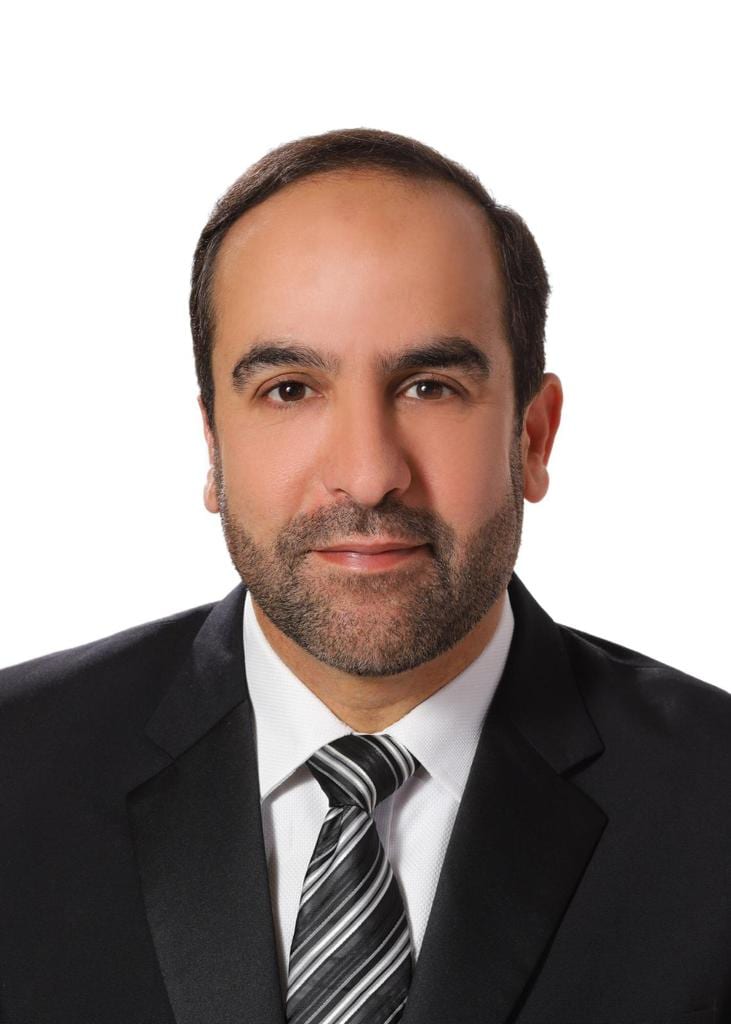
At certain moments, a person transcends the self, and their voice becomes the voice of an entire community. This is precisely what is happening today with Dr Hossam Abu Safiya. The man who dedicated his life to saving the sick now stands, while in the grip of his captors, as a living witness to the ordeal endured by thousands of Palestinian hostages within Israeli detention centers. His recent cry for help, conveyed by his lawyer following a visit, is not merely a personal plea; it is an alarm bell ringing on behalf of all those hidden behind walls, and for all those whose humanity is being stripped away day by day, far from the world’s gaze.
As the coordinator of the Red Ribbons Campaign, I believe Dr Hossam Abu Safiya’s case imposes a twofold responsibility upon us. It is not simply the case of a renowned physician; it encapsulates the reality faced by broad segments of the Palestinian population who have become hostages in every sense of the word.
Yes, hostages – for they are not detained merely due to individual accusations or fair judicial rulings; rather, many are used as tools to pressure Palestinian society as a whole, as instruments of collective intimidation, and as a means to spread terror into every Palestinian home.
The situation is not limited to Dr Hossam Abu Safiya. There are doctors, paramedics, women, children, and administrative detainees held without charge or trial; individuals whose detention periods are repeatedly extended through administrative decisions that lack the most basic guarantees of justice. All of them are hostages within a system that indefinitely defers the right to freedom, leaving the individual’s fate dependent on the will of the detaining authority rather than on a judicial ruling.
The conditions of Palestinian hostages have deteriorated unprecedentedly since October 2023. Violations are no longer isolated incidents or mere exceptions; they have become a recurring pattern, documented by human rights and medical organisations, recounted by those released, and attested to by lawyers, while much of what transpires behind prison walls remains unknown or reaches the outside world only when it is too late.
The accounts that reach us, detailing torture, severe beatings, starvation, medical neglect, denial of treatment, prolonged isolation, and psychological and physical abuse, including sexual assault documented by human rights groups, represent only part of the picture.
The other, far grimmer part remains confined within the cells, known only to those who endure it daily yet cannot tell their stories.
READ: Lawyer fears for life of Dr Hussam Abu Safiya after severe beating in Israeli jail
Perhaps the most dangerous aspect of this policy is that it targets not only the hostages but Palestinian society as a whole. Every story of torture that leaks out, every image of a body ravaged by beatings, and every testimony regarding humiliation and degradation serves as a message not merely to the victim, but to an entire people, signalling that no one is beyond the reach of this fate. It is a policy rooted in manufacturing collective fear and transforming the Palestinian individual into a hostage, even when outside prison walls.
Amidst this landscape, time itself stands as a further witness to the magnitude of the tragedy; among the Palestinian hostages are those who have now begun counting the first days of the second millennium of their captivity. More than a thousand days behind bars, under conditions that, since October 2023, have become harsher and more brutal than ever before.
A thousand days represents more than just a figure in a detention record; it signifies a thousand mornings of deprivation, a thousand nights of anxiety, and a thousand lost opportunities for life, for family, and for children growing up far away from their parents.
The situation facing Dr Hossam Abu Safiya must not be viewed as an isolated case, but rather as an indicator of the imminent danger threatening the lives of thousands of Palestinian hostages. If a renowned physician, whose case garners significant media and human rights attention, sends a message stating he does not expect to emerge alive, what then is the plight of those whose names are unknown to the world and whose news rarely reaches the public?
International law is unequivocal in holding the brutal occupying power fully responsible for the life, as well as the physical and psychological well-being, of every hostage; it absolutely prohibits torture and cruel, inhuman, or degrading treatment. Yet, legal provisions lose their meaning when the international community fails to enforce respect for them, or contents itself with expressions of concern while violations continue with impunity.
The “Red Ribbons” campaign, raising its voice today to save the life of Dr Hossam Abu Safiya, advocates not merely for a single individual, but for a fundamental humanitarian principle that cannot be compromised: that no human being should be turned into a hostage, nor should their life and safety be used as a tool for political leverage or collective retribution. Saving Dr. Hossam is an urgent imperative, yet it is not the end of the road; rather, it marks the beginning of genuine international action to ensure the protection of all Palestinian hostages and detainees, and to put an end to torture, enforced disappearance, arbitrary detention, and impunity.
The time has come for the world to realise that every hour passing without action could mean another life lost in silence. What Hossam Abu Safiya recounts today is not his story alone, but the story of thousands of Palestinian hostages waiting for the world to heed the alarm before silence once again becomes complicit in the tragedy.
OPINION: The normalisation of brutality: When will we reclaim our humanity?
The views expressed in this article belong to the author and do not necessarily reflect the editorial policy of Middle East Monitor.
 Unless otherwise stated in the article above, this work by Middle East Monitor is licensed under a Creative Commons Attribution-NonCommercial-ShareAlike 4.0 International License. If the image(s) bear our credit, this license also applies to them. What does that mean? For other permissions, please contact us.
Spotted an error on this page? Let us know
Latest news
See all


