
![Ferhat Abdi Sahin, also known as Mazloum Abdi makes statements to members of the press following the meeting with Syrian President Ahmed al-Sharaa at the People's Palace in Damascus, Syria on August 25, 2026. [Izz Aldien Alqasem - Anadolu Agency]](https://i0.wp.com/www.middleeastmonitor.com/wp-content/uploads/2026/08/AA-20260825-42306227-42306220-SYRIAN_PRESIDENT_AHMED_ALSHARAA_MEETS_MAZLOUM_ABDI_IN_DAMASCUS-1-1.jpg?fit=920%2C613&ssl=1)
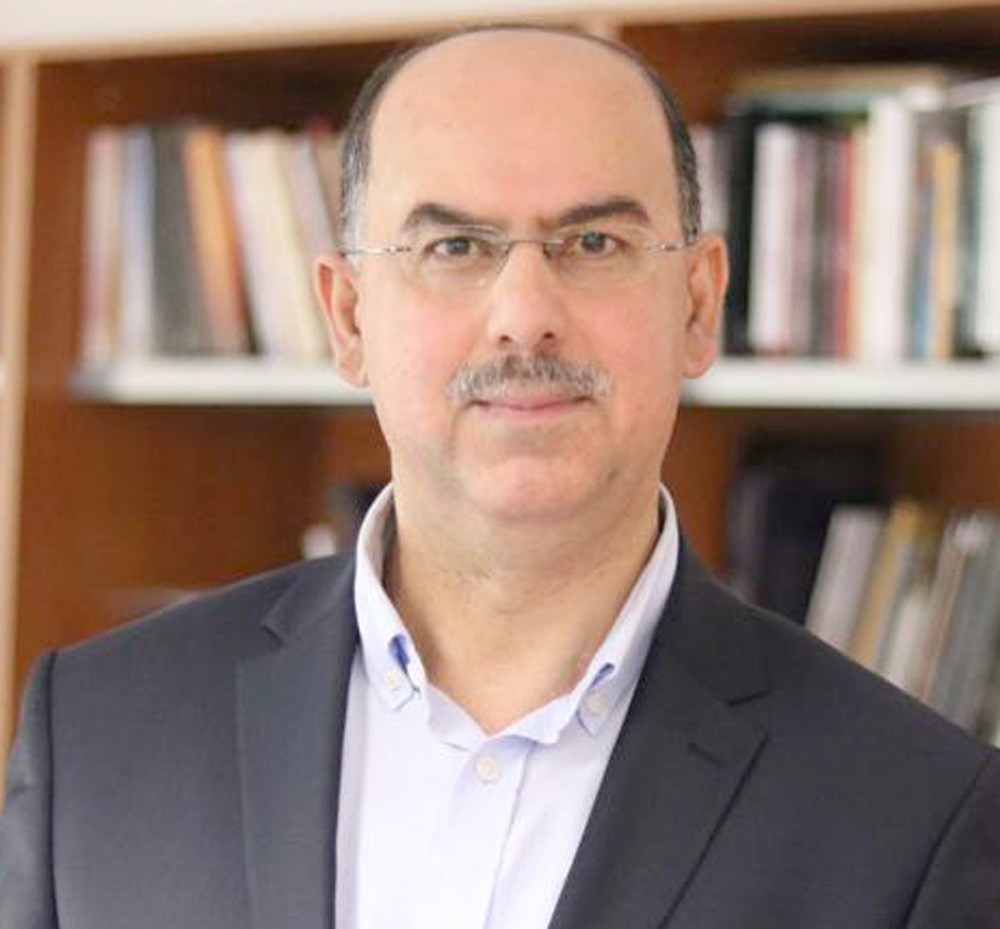
When I look back at my university years—sharing a dorm room with a Kurdish colleague—I am reminded of a country that once understood unity not as a slogan but as a lived experience. Iraq, despite its flaws, carried an instinctive sense of cohesion before its maps began to fracture. That memory returned to me this week as I watched Mazloum Abdi announce the dissolution of the Syrian Democratic Forces (SDF) and their full integration into the institutions of the Syrian state. It was a reminder that belonging can be larger than geography, and that identity, when protected rather than weaponized, becomes a bridge rather than a trench.
I have never harbored negative feelings toward the Kurds. Not because memory is selective, but because we grew up reading the poetry of Abdullah Goran, learning to write our names in Kurdish in high school, and shaping our artistic sensibilities through the songs of Karim Kaban and the compositions of Ahmad Al‑Khaleel. These were not cultural curiosities; they were part of a shared national fabric that existed before grievances multiplied and borders cracked.
What Syrian Kurds have done today goes far beyond nostalgia, geography, or daily politics. It is a complete national lesson—a demonstration of what a state becomes when it is reclaimed, and what identity means when it is integrated rather than deployed as a tool of conflict. Their decision does not concern Syria alone. It speaks to the entire region: Iraq, Lebanon, and even the Polisario movement in the Western Sahara. It is a reminder that nations can only be divided by themselves, and that every attempt to create parallel entities ends in failure, as history repeatedly shows.
The U.S. envoy to Syria, Tom Barrack, described the moment as “historic.” Not because Washington has suddenly changed its worldview, but because this integration aligns with decades of Western scholarship on post‑conflict state‑building. Reports by the International Crisis Group and the works of scholars like Charles Tilly and Francis Fukuyama have long argued that a state can only exist when the instruments of legitimate violence are unified under a single authority.
Any duality in military power inevitably produces duality in sovereignty. What Syrian Kurds have done is a textbook application of this principle: one army, one government, one state.
This is precisely what did not happen in Iraq. Iran‑aligned militias—armed groups responsible for widespread abuses and a direct threat to the concept of the state—chose loyalty to a power outside Iraq’s borders. They refused integration, preferring to serve as instruments of a regional project that has nothing to do with Iraqi interests. The result is a country drained from within, its sovereignty chipped away piece by piece, its institutions hollowed out.
READ: Syria: After SDF dissolution, al-Sharaa discusses integration steps with Mazloum Abdi
Lebanon offers another example of failure: dual weapons, dual authority, dual loyalty. A state suspended between a beautiful constitutional text and a distorted political reality.
Syria, despite everything it has endured, has now presented a different model—one that says integration is not concession but restoration of meaning. Kurdish identity, when protected within the state, becomes a source of strength rather than a threat, echoing the theories of multicultural citizenship in Western political literature.
What happened in Damascus is not an administrative gesture. It is a redefinition of the relationship between the state and its components. It is a declaration that a unified Syria is not a slogan but a viable project, and that true integration is not about winners and losers but about recognizing that everyone becomes stronger when they belong to one state rather than competing geographies.
This lesson must be read carefully in Iraq. It must be read in Erbil and Sulaymaniyah as much as in Baghdad. It must be read in Najaf as much as in Mosul. Division has never produced a state, never created security, never generated stability.
All it has done is open the door to external influence feeding on institutional weakness, militias feeding on the erosion of sovereignty, and sectarian rhetoric feeding on fear.
Syrian Kurds have offered a rare national lesson: identity flourishes when integrated and withers when isolated. A state is not geography but a social contract. Strength lies not in weapons but in the legitimacy of those who hold them. The future can only be built when societies stop stitching patches onto old garments and begin tailoring a new fabric for the state.
This is the lesson we must hold onto today, amid the failures surrounding us—amid the decay threatening Iraq and Lebanon, amid the militias working to dismantle the very idea of the state through blind loyalty to Tehran. Syria, against all odds, has produced a successful model in a regional moment dominated by collapse.
The question now is whether we learn from this lesson—or continue sewing patch upon patch until nothing remains of the garment but its name
OPINION: Rowan Williams: Guardian of the soul in an era of commercialised faith
The views expressed in this article belong to the author and do not necessarily reflect the editorial policy of Middle East Monitor.
 Unless otherwise stated in the article above, this work by Middle East Monitor is licensed under a Creative Commons Attribution-NonCommercial-ShareAlike 4.0 International License. If the image(s) bear our credit, this license also applies to them. What does that mean? For other permissions, please contact us.
Spotted an error on this page? Let us know
Latest news
See all


