
![Ahmad Alzoubi, Palestinian scholar and director of MEMO Brazil, during a series of lectures in Chile about the conditions of journalists in Gaza and media censorship [MEMO]](https://i0.wp.com/www.middleeastmonitor.com/wp-content/uploads/2025/08/WhatsApp-Image-2025-08-21-at-13.18.01_c41b625e-1-1.jpg?fit=920%2C613&ssl=1)
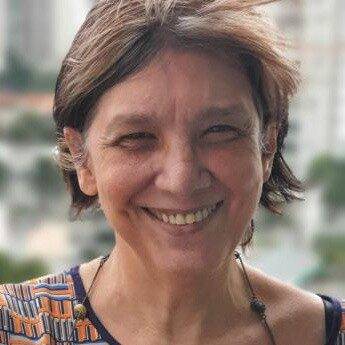
In an 11-day program at Chilean universities, Ahmad Alzoubi — author of Palestinian Diaspora in Latin America: Studies on Media and Identity, by MEMO Publishers — discussed with journalists, academics, and students the harmful effects of shallow media coverage of events in Palestine. To Alzoubi, detached from direct Palestinian sources, newspapers and networks disseminate a so-called “war”, underpinning a narrative that normalizes genocide.
“The Latin American mainstream media avoids this word [‘genocide’], echoing US and European agencies, which conform with Zionist lobbies,” says Alzoubi.
In his book, based on his doctoral thesis, Alzoubi addresses the relationship between diasporic communities and information coming from Palestine. The author notes that current generations of descendants of immigrants who arrived in the last century still prefer to seek news from Arab agencies rather than trust the mainstream media.
The book, published in Portuguese this year by MEMO in São Paulo, has sparked interest in Chile — one of the countries studied, alongside Brazil, Argentina, El Salvador, and Honduras. Despite being the Latin American country with the largest Palestinian presence — with a well-integrated community in politics, economics, culture, and sports — the phenomenon recurs. Local media still lacks trust of this major segment of the population when it comes to reporting on the Israeli actions in Palestine, explains Alzoubi.
Even though the practice of genocide, with refined cruelty in the killing of children, is explicit on social and regional media, the Latin American press still circumvents the correct wording. It is not about a conflict or war, but about an occupier intent on ethnic cleansing and the elimination of an Indigenous population.
The researcher’s visit gathered attention from the local press. In an interview with the channel Hoy en La Voz — which seeks to counter the pro-Israel hegemonic narrative — Alzoubi defended the right to resistance, whether popular, media-based, academic, and equally armed, as enshrined in international law. To La Tercera, he questioned the perception that Israelis are protesting the attacks on Gaza: unfortunately, he says, only the issue of the hostages mobilizes them.
Debates in universities: Our colleagues are dying
![Ahmad Alzoubi, Palestinian scholar and director of MEMO Brazil, during a series of lectures in Chile about the conditions of journalists in Gaza and media censorship [MEMO]](https://i0.wp.com/www.middleeastmonitor.com/wp-content/uploads/2025/08/IMG_20250818_155701-2048x1152-1.jpg?w=593&h=396&ssl=1 "IMG_20250818_155701-2048x1152 (1)")
![Ahmad Alzoubi, Palestinian scholar and director of MEMO Brazil, during a series of lectures in Chile about the conditions of journalists in Gaza and media censorship [MEMO]](https://i0.wp.com/www.middleeastmonitor.com/wp-content/uploads/2025/08/IMG_20250818_155628-2048x1152-2.jpg?w=319&h=179&ssl=1 "IMG_20250818_155628-2048x1152")
![Ahmad Alzoubi, Palestinian scholar and director of MEMO Brazil, during a series of lectures in Chile about the conditions of journalists in Gaza and media censorship [MEMO]](https://i0.wp.com/www.middleeastmonitor.com/wp-content/uploads/2025/08/IMG_20250818_155852-2048x1152-1-2.jpg?w=319&h=213&ssl=1 "IMG_20250818_155852-2048x1152 (1)")
Alzoubi joined lectures with Kamal Cumsille, director of the Eugenio Chahuán Center for Arab Studies at the University of Chile; Alberto Rojas, director of the Faculty of Communication at the Finis Terrae University; Patricio Jara, director of the Faculty of Communication at the University of Chile; and the municipal representative, Alejandra Valle. These were followed by debates with journalism students that addressed the situation of media workers in Gaza.
Alzoubi recalled the journalists killed in Gaza and those continuing to cover the Palestinian struggle for survival, despite the risks, who need support from colleagues abroad to protect them and echo their voices. Another form of support, he noted, is academic boycott, with students worldwide calling for their universities to sever ties with Israeli institutions. “Preventing genocide cannot be the responsibility of Palestinians alone, as Israel receives support from Western governments and the United States. We, as journalists and researchers, must support our professional equals.”
Videos of the situation in Gaza illustrated his lecture, including an appeal for international coverage to extend beyond European and American lenses. For the speaker, there is a lack of a Latin American perspective and sensitivity, much-needed to understand what a people under colonial aggression are going through. If there are Latin American correspondents, they are in Tel Aviv, but not in Palestine or the West Bank. “This media bias is illogical and part of colonialism,” stated Alzoubi, encouraging students to include Palestine in their research projects and field training, for example, in Palestinian refugee camps in Syria, Lebanon, and Jordan.
Searching diasporic memories: an aural-oral History
Even in the diaspora, many immigrants expelled from their land by Zionist gangs or by the violent establishment of Israel in 1948 insisted on asserting themselves as Palestinians, with a right of return guaranteed by several UN resolutions. Therefore, a greater Palestine exists, scattered across the world, particularly in Latin America, where many migrated. In search of the memory preserved in oral history, Alzoubi dedicated part of his visit to continuing his research, interviewing Chilean Palestinians about the history of their immigrant ancestors, their integration into society, and the perspective they have from afar on Palestine today.
In this round of interviews, Alzoubi found a Palestinian community that does not characterize itself by a right or left-wing ideological divide, but rather by a common solidarity with the Palestinian people. To Alzoubi, if the media incorporated more practices of humanitarian journalism, prioritizing the effect of policies on human lives, it could better reflect these concerns. “When lobbies and economic power determine the editorial line, it is natural for the affected people to break trust with their narratives.”
First steps to a 2026 international seminary: Emphasis on Palestine
Naturalized as a Brazilian and having worked on the launch of the Middle East Monitor in Brazil — with the Portuguese-language portal Monitor do Oriente Médio — and in the establishment of the Latin Palestine Forum, now professor at Lusail University in Qatar, Alzoubi has contributed to organizing international debates that bring together researchers and journalists from Latin America and the Middle East, focusing on the Palestinian issue. The University of São Paulo (USP) hosted a major conference in 2018, attended by Wadah Khanfar, former director-general of the international network Al Jazeera. The launch of MEMO in Brazil was followed by a seminar with Latin American journalists and Professor Daud Abdullah, director of the international MEMO.
![Chilean congressman Hernán Palma with the Palestinian scholar and author Ahmad Alzoubi. Alzoubi also met with senator Sérgio Salazar and the Palestinian ambassadors to Algeria and Jordan [MEMO]](https://i0.wp.com/www.middleeastmonitor.com/wp-content/uploads/2025/08/WhatsApp-Image-2025-08-19-at-20.24.53-e1755793376962-1.jpeg?resize=444%2C333&ssl=1)
Chilean congressman Hernán Palma with the Palestinian scholar and author Ahmad Alzoubi. Alzoubi also met with senator Sérgio Salazar and the Palestinian ambassadors to Algeria and Jordan [MEMO]
The views expressed in this article belong to the author and do not necessarily reflect the editorial policy of Middle East Monitor.
 Unless otherwise stated in the article above, this work by Middle East Monitor is licensed under a Creative Commons Attribution-NonCommercial-ShareAlike 4.0 International License. If the image(s) bear our credit, this license also applies to them. What does that mean? For other permissions, please contact us.
Spotted an error on this page? Let us know
Latest news
See all


