
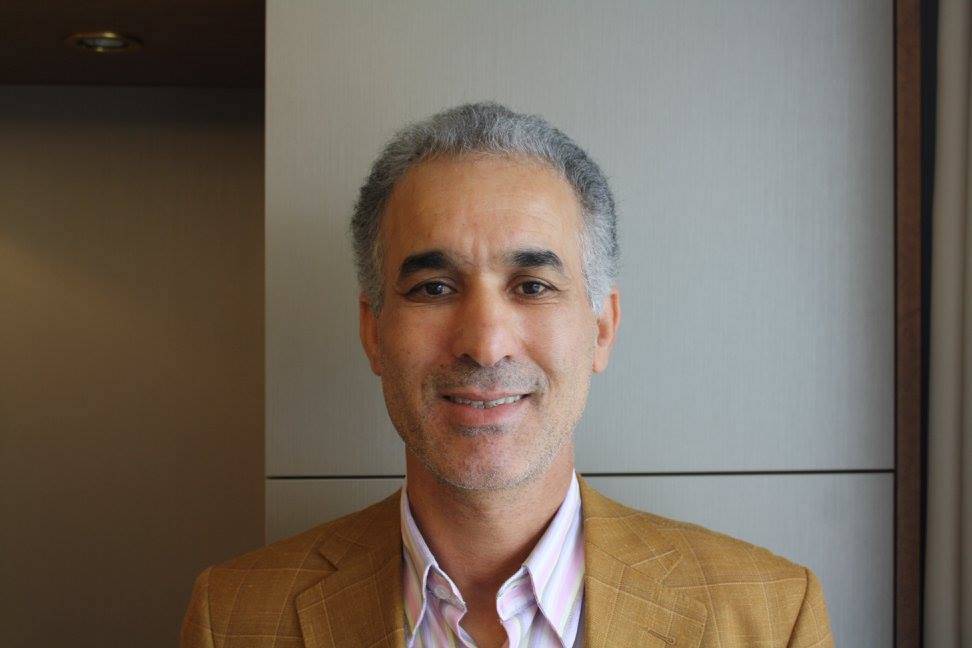
![Hanna Tetteh, UN Special envoy of the Secretary General for the horn of Africa, speaks during the first African edition of the Berlin Climate and Security Conference in Nairobi on July 6, 2023. [SIMON MAINA/AFP via Getty Images]](https://i0.wp.com/www.middleeastmonitor.com/wp-content/uploads/2025/10/GettyImages-1507669119-scaled-e1761207474386.jpg?fit=920%2C613&ssl=1)
When Hanna Tetteh, the new UN envoy to Libya, unveiled her “roadmap for renewed political consensus” on 21 August, it was meant to signal a fresh start after years of stagnation. She assumed that two months, a kind of self-imposed deadline, would be enough to implement the first stage of the plan. In her briefing to the United Nations Security Council (UNSC) that day, Tetteh outlined two immediate priorities: strengthening the capacity of the High National Elections Commission by recomposing and filling its vacant board seats, and finalising the legal framework for elections within two months.
Two months later, however, even this first benchmark — establishing a constitutional framework to guide elections — remains unmet. The United Nations Support Mission in Libya (UNSMIL) has yet to move beyond consultations and general statements, while the country’s rival authorities continue to trade blame and entrench their control. What was meant to be a time-bound roadmap is already following the familiar pattern of missed deadlines and fading credibility.
With nothing achieved since August, Tetteh openly shifted to a more confrontational tone. In her 14 October briefing to the Security Council, she warned: “Should our current engagement fail… UNSMIL must – and will – pursue another approach and seek the support of this Council to help ensure that the roadmap advances.” The remark captured a growing frustration within UNSMIL, but it also exposed how little progress had been made on the roadmap she announced two months earlier.
Since taking office, Hanna Tetteh has briefed the UNSC four times — in April, June, August, and October 2025 — each time presenting herself as confident that the Council stands behind her strategy in Libya. Public records, however, tell a more cautious story. While Council members have welcomed her briefings and expressed general encouragement for the roadmap, there has been no formal resolution, no mandate expansion, nor any clear commitment to intervene should Libyan rivals continue to block progress. Tetteh’s rhetoric suggests strong backing, but in practice, UNSMIL does not have the full and strong backing of the UNSC as first suggested leaving the success of her roadmap dependent on persuasion rather than enforceable authority.
US 3Ps in Africa: Prosperity for Whom?
A pattern of missed deadlines and weak enforcement
The stalled implementation of Libya’s electoral roadmap continues to expose the deep divisions among the country’s rival authorities. In mid-October 2025, UN Secretary-General António Guterres emphasised the urgency of compliance, warning: “I urge Libyan leaders to respect the national electoral roadmap and to take all necessary steps to avoid further divisions and security tensions.”
Yet while the Secretary-General’s words place responsibility squarely on Libyan leaders, UNSMIL continues to face the consequences of inaction. Despite Tetteh’s optimism and confidence in the Council, it has so far failed to take any punitive measures against the protagonists accused of stalling the process. The mission has no additional resources or enforceable authority, and the Council’s statements, while welcoming the roadmap, have not resulted in concrete steps to compel compliance. As a result, the electoral roadmap remains stalled, with deadlines missed and implementation lagging, highlighting the persistent challenge of translating UN plans into tangible progress on the ground.
Delays, rivalries, and foreign interference
The persistent delays in implementing the roadmap reflect not only UNSMIL’s limited leverage but also the enduring political fragmentation within Libya, amplified by foreign interference. Each of the country’s rival authorities receives backing from different external powers, creating incentives to maintain divisions rather than reach compromise. These sponsors often provide political, financial, or even military support, which emboldens local leaders to resist UN-led initiatives and stall the electoral process. Combined with mutual mistrust and the absence of credible consequences for obstruction, these external influences ensure that deadlines continue to slip, leaving the roadmap at risk of becoming yet another unfulfilled UN initiative.
The credibility of the electoral roadmap depends on its sequential, time-bound structure. Each stage is a building block: the successful completion of one step — such as finalising the legal framework or reconstituting the High National Elections Commission — is essential for the next. Delays in any single step inevitably cascade, pushing back subsequent milestones and eroding confidence in the overall plan. With initial benchmarks still unmet, the roadmap’s timeline is already unravelling, making the prospect of a unified government capable of organising elections within Tetteh’s 12-to-18-month deadline increasingly unlikely.
From battlefield to boardroom: Turkey’s grip on Libya
The cascading delays in implementing the electoral roadmap carry significant political and security risks for Libya. Each missed benchmark deepens uncertainty and emboldens rival authorities, who continue to consolidate power in their respective territories rather than cooperate on national elections. The stalled process also heightens the risk of renewed tensions, as militias and armed groups exploit the political vacuum to assert influence. Without tangible progress, the window for building consensus narrows, increasing the likelihood that Libya’s fragile political landscape will further fragment and destabilise.
Foreign interference compounds the risks created by these delays. Each local authority is supported by different external powers, which can provide financial, political, or military backing that insulates them from domestic pressure or UN persuasion. This external support reduces incentives to compromise, encourages prolongation of the status quo, and increases the potential for proxy conflicts. As a result, stalled implementation of the roadmap not only delays elections but also heightens the risk that Libya’s internal divisions could escalate into wider instability, further undermining both national reconciliation and international confidence in the UN-led process.
Libya’s electoral roadmap, might be carefully designed, but still is at risk of unravelling under the combined weight of internal rivalries, foreign interference, and the UNSC’s reluctance to enforce accountability. Sequential delays are cascading, deadlines are slipping, and confidence in the process is fragile. Unless Libyan leaders act decisively and the international community moves beyond rhetorical support, the prospect of a unified government capable of organising elections within Tetteh’s 12-to-18-month timeframe may become increasingly remote. The situation underscores a familiar pattern: even well-intentioned UN initiatives can struggle when political will and enforcement mechanisms are lacking.
The views expressed in this article belong to the author and do not necessarily reflect the editorial policy of Middle East Monitor.
 Unless otherwise stated in the article above, this work by Middle East Monitor is licensed under a Creative Commons Attribution-NonCommercial-ShareAlike 4.0 International License. If the image(s) bear our credit, this license also applies to them. What does that mean? For other permissions, please contact us.
Spotted an error on this page? Let us know
Latest news
See all


