
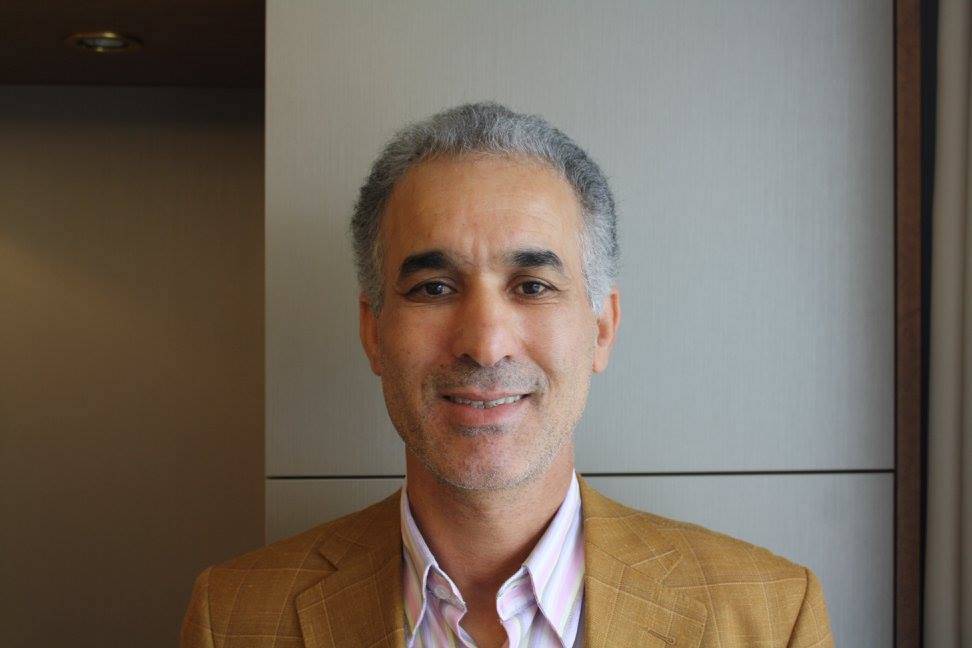
![Khalifa Haftar, the leader of the armed forces in the east of the country in Libya [Khalifa Haftar forces press office/Anadolu Agency]](https://i0.wp.com/www.middleeastmonitor.com/wp-content/uploads/2022/11/AA-20221117-29465831-29465829-GREEK_FOREIGN_MINISTER_MET_HAFTAR_IN_BENGHAZI_IN_DIPLOMATIC_ROW_WITH_LIBYAN_OFFICIALS.jpg?fit=920%2C613&ssl=1)
For months now, Field Marshal Khalifa Haftar has been pushing to further legitimize his long-standing grip on power in Libya’s eastern and parts of southern regions. The general—who launched what he and his supporters called the Karama (“Dignity”) Revolution in May 2014—has always had one overriding ambition: to rule Libya. His self-styled Libyan National Army (LNA), initially composed of former Gaddafi-era soldiers and new volunteers, became the vehicle for that ambition. More than a decade later, Haftar’s influence has not waned. Instead, it has evolved—strengthened and partially legitimised by economic ventures and large-scale reconstruction projects across the east, including the rebuilding of 2023 flood-devastated Derna. In Sirte, at the heart of the country, LNA-backed projects have transformed the city’s landscape, with a newly renovated airport, expanded housing developments, and an overhaul of infrastructure destroyed during both the 2011 civil war and the 2016 battle against the Islamic State group.
Faced with a new United Nations roadmap that promotes an inclusive Structured Dialogue — one that could sideline him and his loyalists — the septuagenarian general made a decisive pre-emptive move. In July 2024, he appointed his son, Saddam, as deputy commander of the LNA, and his other son, Khaled, as chief of staff. The reshuffle effectively, in the eyes of his adversaries, turned the LNA into a family enterprise rather than a national military force, tightening the Haftars’ personal control while undermining any claim that the institution serves all Libyans.
To reinforce his bid for public legitimacy—and likely to pre-empt the UN’s roadmap—Haftar has launched a series of high-profile tribal meetings at his headquarters in Rajma, southeast of Benghazi. In one such gathering, he stated that the “Libyan solution” would be guaranteed by the LNA to bring an end to the country’s transitional period. These meetings, attended by delegations from across Libya, are carefully choreographed to project an image of broad national consensus behind what he calls a “Libyan-defined solution.” In practice, they rally tribal leaders around his leadership and family, reaffirming the LNA’s dominance while portraying it as the custodian of Libya’s sovereignty. By turning Rajma into a political stage, Haftar seeks to bypass formal political institutions and undercut the UN’s Structured Dialogue process with a domestically branded alternative.
Haftar’s latest tribal meetings took an unusual turn when he hosted sheikhs and dignitaries from Bani Walid on 11 November 2025—an unlikely event given his past actions in the city and its longstanding loyalty to former leader Muammar Gaddafi. Bani Walid, hometown of Libya’s largest tribe, the Warfalla, was the last city to fall to NATO-backed forces in 2011. In the following year, it was attacked again to dislodge remaining Gaddafi loyalists, with General Haftar personally taking part in the siege and the subsequent October 2012 operations. However, the Social Council of Bani Walid quickly refuted the delegation’s legitimacy, stating the meeting ‘attempted to falsely present themselves as elders and dignitaries without any legal or social basis.”
Marginalised and neglected by successive Libyan governments, Bani Walid has gradually assumed a more influential role by becoming a driving force behind numerous tribal reconciliations across the country. In January 2019, its Social Council brokered a ceasefire between the Tripoli Protection Force, loyal to the Government of National Accord, and the Seventh Brigade, allied with Haftar, south of Tripoli. And again, in the closing days of the LNA’s failed attack on Tripoli in 2020, Bani Walid played a crucial role by providing safe passage to retreating LNA forces and Russian-supported mercenaries, effectively helping bring an end to the siege of the capital.
In the Rajma meeting, Haftar addressed the Warfalla dignitaries directly, declaring: “The Libyan people recognise the critical nature of the current phase and the country requires a radical change” and that such change must “originate from a peaceful and organised popular movement, where citizens take the initiative to determine their destiny and build the state.”
While Haftar’s outreach to tribes like the Warfalla is framed in terms of national reconciliation and sovereignty, a closer reading suggests it also serves to consolidate personal and familial power. The general has long promoted a so-called “Libyan-defined solution,” positioning the LNA not merely as a military force but as the arbiter of Libya’s political destiny. By hosting tribal meetings, Haftar is reinforcing the perception that any future settlement must win LNA’s approval. In this sense, the gatherings function less as platforms for genuine dialogue and more as instruments to legitimise his leadership and political vision.
The strategy is closely intertwined with familial ambitions. Given his age, Haftar may have little chance of ascending to the presidency, but he appears intent on consolidating a lasting role for his family in Libya’s political and military structures. Securing tribal approval is crucial not only for forging alliances within a society where tribal ties are decisive but also for projecting a favourable public perception. His outreach sends a clear message to the UN and all major foreign actors that the LNA—and the Haftar family—cannot be discounted or marginalized if Libya is ever to achieve stability and peace.
Backed by extensive reconstruction across eastern, central, and southern Libya—territories under LNA control—and building on his forces’ elimination of major terrorist threats, Haftar is now seeking to further legitimize his claim to power. In this narrative, the LNA, now almost entirely controlled by his family and loyalists, is presented not only as a vehicle of authority but also as the guarantor of stability and peace. Yet this consolidation comes at a cost: ordinary citizens and civil society operate under limited freedoms, while political decision-making remains tightly centralized under Haftar’s command, despite the existence of a parallel government and parliament to which he is, nominally, accountable.
Taken together, Haftar’s tribal outreach, family consolidation, and economic initiatives constitute a multi-layered strategy designed to project an image of inclusive governance while keeping actual decision-making tightly controlled. At the same time, these manoeuvres reflect, perhaps deliberately, an attempt to paralyze the UN’s efforts aimed at holding general presidential and legislative elections to bring an end to Libya’s transitional period. By consolidating influence through the LNA, co-opting key tribal constituencies, and reinforcing his image as a guarantor of stability, Haftar positions himself and his forces as indispensable arbiters of Libya’s political future—underscoring the persistent tension between externally mediated processes and the domestic power structures that ultimately determine the country’s trajectory.
OPINION: Israel in peace and war: How society rejects peace and endorses genocide
The views expressed in this article belong to the author and do not necessarily reflect the editorial policy of Middle East Monitor.
 Unless otherwise stated in the article above, this work by Middle East Monitor is licensed under a Creative Commons Attribution-NonCommercial-ShareAlike 4.0 International License. If the image(s) bear our credit, this license also applies to them. What does that mean? For other permissions, please contact us.
Spotted an error on this page? Let us know
Latest news
See all


