
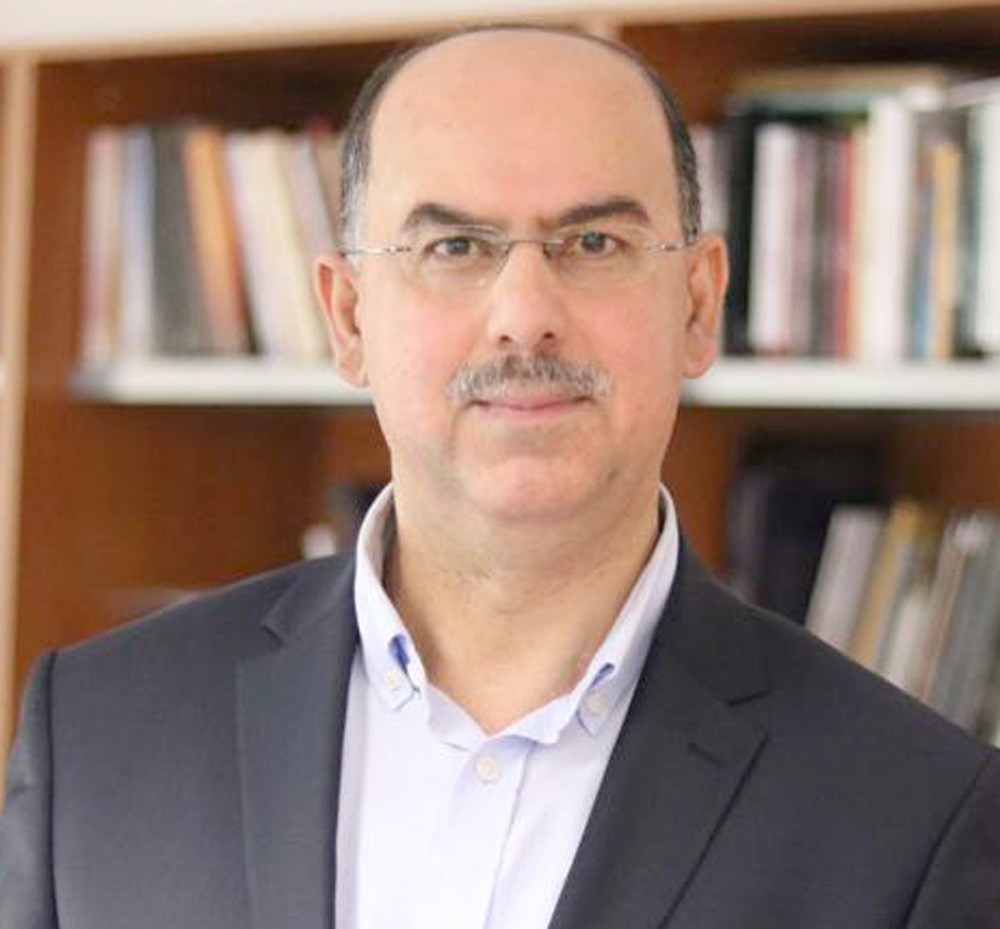
![Yasmine Belkaid [Wikipedia]](https://i0.wp.com/www.middleeastmonitor.com/wp-content/uploads/2025/12/2048px-2017-03-31_-_Yasmine_Belkaid_-_1324-e1764855940129.jpg?fit=920%2C662&ssl=1)
My personal physician — one of Britain’s most renowned doctors and recipient of one of the highest honours from the late Queen Elizabeth II — always finds time to chat about things other than medicine the moment he remembers I am a journalist. During my last visit, he raised the issue of the large-scale Iraqi money laundering that has become a quietly tolerated problem in Britain.
He told me, ‘We Britons are not happy about this smuggled Iraqi money entering our country with such blatant governmental complicity. And for a simple reason: it never goes into our education or health sectors.”
He is right. Money has no value if citizens do not feel its impact. A nation’s capital does not grow unless its funds flow into schools and hospitals.
The French, for example, are far happier with Dr Yasmine Belkaid than with any Arab money invested in entertainment, tourism or sports. To them, she represents a permanent and inexhaustible source of health capital, unlike the billions invested in leisure that disappear without trace.
Belkaid, who was recently honoured by the Government of Dubai with the ‘Arab Pioneers’ award in the medical category, may indeed represent a model of a successful Arab woman in the West. But that is of little relevance to ordinary people in France. What matters to them is what this Algerian scientist has given them, regardless of her Arab or Algerian identity. To them, she is a luminous human asset, far more valuable than any foreign investment.
This is why she was chosen to lead the prestigious Institut Pasteur, which was founded in 1887 by the French scientist Louis Pasteur, who was renowned for his work on vaccinations. The sole mission of this institution has always been to improve human health.
READ: When the machine issues fatwas and the cleric falls silent
Like the researchers who share her way of thinking, Belkaid is under no illusions about the magnitude of the challenge. ‘Science is in danger,’ she warns, pointing to the decline in funding, trust and societal priority. This is exactly what my British doctor told me.
Belkaid is the daughter of a mother who was a language teacher and a father who fought in Algeria’s independence movement and was assassinated during the bloody ‘Black Decade’, in which she was born and raised.
Science and politics have always been intertwined, and in Belkaid’s case, they remain inseparable. “I was very lucky to grow up in a family environment where what you do has meaning,” she says.
Following the assassination of her father, Aboubakr Belkaïd, while he was serving as Algeria’s Minister of the Interior in 1995, Yasmine knew that she could not return to Algeria. However, the opportunities available to a young scientist of Arab origin in France were limited.
So, she reinvented herself, guided by the words engraved on her father’s grave: ‘The battles we lose are the ones we do not fight.’
She moved to the United States and stayed there for nearly three decades. She eventually became Director of the Human Immunology Center at the US National Institutes of Health (NIH).
She recalls the deep joy she felt upon being welcomed in the United States. Humanity, she insists, needs its scientists to be present, visible, and recognised.
“People often see scientists as soulless creatures who follow data and create monsters, pathogens, and so on,” Belkaid says. “That is not real science. Scientists are deeply committed to the ethics of what they do.”
This Algerian researcher—now celebrated in France and internationally, after the Arab world lost her to extremism when her father was murdered and she found refuge in her work—believes that science today has become a “spectator,” sidelined by widespread public distrust in institutions. The problem, she argues, is not disbelief in science but a profound distrust of the political system.
The inspired Guardiola: A moral voice on Palestine
For this reason, she has made it part of her mission to anchor her scientific research in restoring trust. But until such confidence is rebuilt at a higher social level, doctors alone cannot change much—not without investors and decision-makers finally understanding that real national capital begins with health and education.
She recalls the deep joy she felt when she was welcomed to the United States. She insists that humanity needs its scientists to be present, visible and recognised.
“People often see scientists as soulless creatures who follow data and create monsters and pathogens,” says Belkaid. ‘That is not real science. Scientists are deeply committed to the ethics of what they do.’
This Algerian researcher, who is now celebrated in France and internationally after losing her place in the Arab world to extremism when her father was murdered and she found refuge in her work, believes that science has become a ‘spectator’ today, sidelined by widespread public distrust of institutions. She argues that the problem is not disbelief in science, but a profound distrust of the political system.
The views expressed in this article belong to the author and do not necessarily reflect the editorial policy of Middle East Monitor.
 Unless otherwise stated in the article above, this work by Middle East Monitor is licensed under a Creative Commons Attribution-NonCommercial-ShareAlike 4.0 International License. If the image(s) bear our credit, this license also applies to them. What does that mean? For other permissions, please contact us.
Spotted an error on this page? Let us know
Latest news
See all


