
![Iraqi President Barham Salih during a press conference in Baghdad, Iraq on September 02, 2020 [Murtadha Al-Sudani/Anadolu Agency]](https://i0.wp.com/www.middleeastmonitor.com/wp-content/uploads/2020/09/French-President-Macron-in-Baghdad_14.jpg?fit=920%2C613&ssl=1)
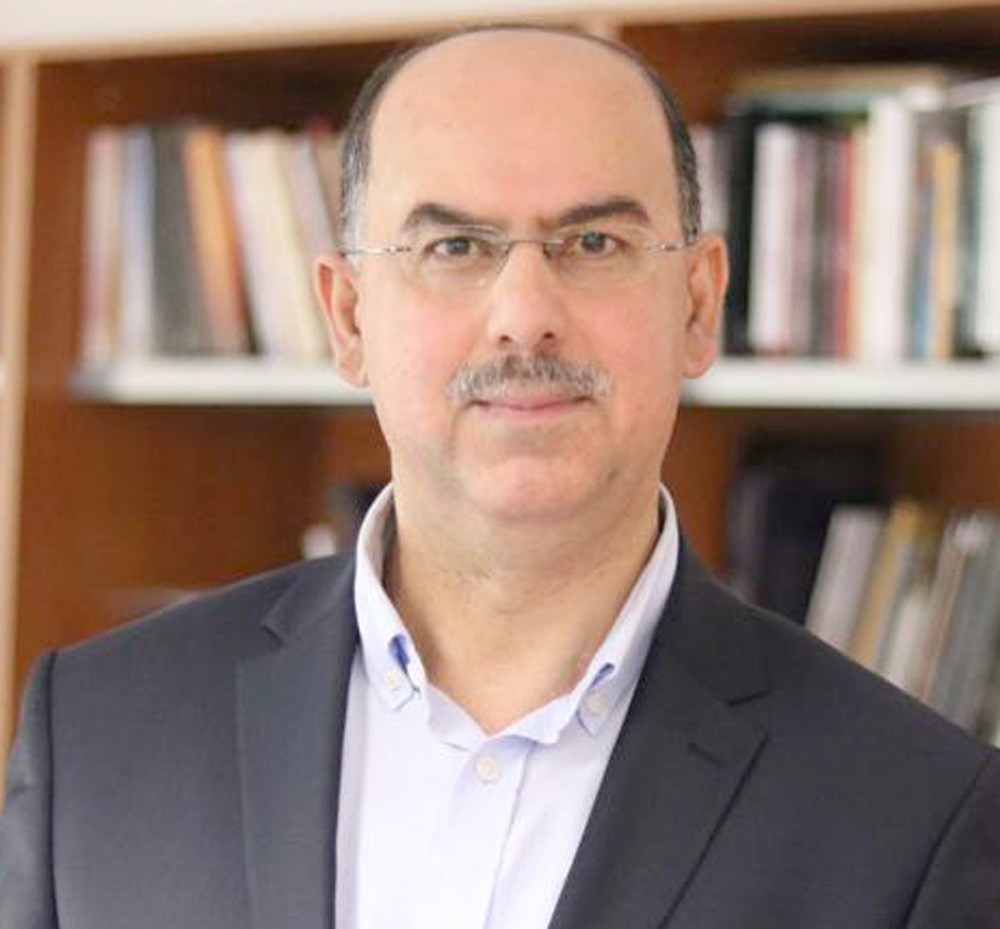
The appointment of Barham Salih as the United Nations High Commissioner for Refugees is not just a technical decision. It is a political statement, signalling that the UN is investing in the wrong future. It is a future in which a politician who was part of Iraq’s occupation machinery and a partner in building a failed state now returns to an international institution that requires far more than this type of political actor.
The story does not start here, but revisiting it is revealing.
While on a private visit, Barham Salih, then President of Iraq, feigned humility in front of guests he knew at a luxurious residence rented for him by the Iraqi embassy in London using public funds. Among them were a writer and a journalist, who later recounted the story to me. Salih remarked sarcastically on the presidency he held: ‘I can’t even use Ahmed Hassan al-Bakr’s vulgar words when he insulted the office… because my position has no real authority. So, what am I supposed to insult?’
Francesca Albanese, the UN Special Rapporteur on the situation of Human Rights in the Palestinian Territories, is no ordinary diplomat. She is a moral voice and an international official who challenges major powers in defence of the Palestinians. She is a voice that does not fear the truth.
What about Barham Salih, the new head of the UNHCR? He is a man who stood idly by during Iraq’s largest displacement crisis. Over two million Iraqi refugees were abandoned during his presidency. Half a million internally displaced people are still living in constant movement after militias seized their lands and homes in sectarian cleansing that he witnessed firsthand.
How can a man who observed, and in some ways enabled, such destruction be entrusted with the global refugee portfolio? What a paradox.
He once justified his inaction in office by saying: ‘I am not alone… Even Muqtada al-Sadr, Hadi al-Amiri and Qais al-Khazali cannot control their militia members.’
One attendee reminded him of Nouri al-Maliki’s infamous words to Mustafa Al-Kadhimi: ‘I do not recognise your army. I have people to protect me.’
This is not governance. This is the reality that Salih managed. What kind of High Commissioner does this produce today?
He would speak this way only in front of people he thought would tolerate his political hypocrisy. Yet this small anecdote reveals the moral abyss into which the UN has fallen by choosing Barham Salih, a man with no human capital, for a role that requires someone like Francesca Albanese.
Meanwhile, the UNHCR is cutting staff due to international funding shortages. Five thousand positions have been eliminated since the beginning of the year. Yet the UN found time to appoint a man who was one of the architects of his country’s failure to its top seat. He was once described as ‘a modified version of Ibrahim al-Jaafari’. Today, the UN is presenting him to the world as a guardian of refugee rights. What irony.
In his latest addresses to mark the New Year and the anniversary of the Iraqi Army, Salih appeared to eulogise the political process that he helped design. He called for a “new political contract”. He expressed sympathy for his country. Yet they do not absolve him.
In his article for Foreign Policy twenty years after the occupation of Iraq, he combined ‘liberation’ and ‘failure’ in one phrase — a duality that I criticised at the time. It is like a man waking up in a different bed to the one he slept in for two decades and forgetting that he spent those years creating the very devastation he now condemns.
This appointment is no victory for refugees. Nor is it an enhancement of UN ethics. Rather, it is a declaration of the moral death within the international institution and a renewed elevation of a man who was part of Iraq’s machinery of failure.
When international institutions honour those who contribute to the displacement of peoples, universal injustice spreads. A refugee is not just a statistic to be managed within a budget. They are human beings with memories, bodies and rights. Entrusting the protection of these rights to a man who spent years modelling political failure means that the international system prioritises its own calculations over the dignity of those affected. Refugees today suffer a dual betrayal: abandonment by the local states that displaced them and institutional betrayal when their care is entrusted to individuals with a history of complicity or negligence.
Furthermore, Salih’s record is marred by an apparent shadow of corruption that cannot easily be dismissed. Corruption is not always evident in the form of a signed financial deal; sometimes it takes the form of ethical and political compromise, such as deliberate silence, opaque alliances and arrangements that produce militias operating outside the law and fighters without accountability. Selecting someone from a political environment immersed in such moral compromises makes the UNHCR vulnerable to scepticism and undermines its credibility, particularly in the eyes of victims of displacement who were ignored while Salih held power.
Ultimately, the UN’s misstep in this appointment sends a troubling message: the organisation may bend to geopolitical considerations or prioritise representation over ethical and humanitarian standards. By selecting a figure from a country that has endured 22 years of political failure and corruption, the UN is not only choosing experience, but also sending a symbolic message about the place of victims in its priority hierarchy. The gravest injustice lies in the fact that the world’s refugees have become a budgetary line item managed by political figures rather than individuals with pure humanitarian credentials and credibility.
What matters most is not self-recrimination. What matters is thinking about building a different future. A future in which refugees are no longer at the mercy of those who contributed to their displacement.
The views expressed in this article belong to the author and do not necessarily reflect the editorial policy of Middle East Monitor.
 Unless otherwise stated in the article above, this work by Middle East Monitor is licensed under a Creative Commons Attribution-NonCommercial-ShareAlike 4.0 International License. If the image(s) bear our credit, this license also applies to them. What does that mean? For other permissions, please contact us.
Spotted an error on this page? Let us know
Latest news
See all


