
![The prince of Saudi Arabia Turki bin Faisal Al-Saud, former chief of intelligence and former Saudi ambassador to the US. [Artur Widak - Anadolu Agency]](https://i0.wp.com/www.middleeastmonitor.com/wp-content/uploads/2022/10/AA-20221011-29129179-29129176-PRINCE_OF_SAUDI_ARABIA_TURKI_AL_FAISAL_OPENS_AN_EXHIBITION_IN_KRAKOW.jpg?fit=920%2C613&ssl=1)
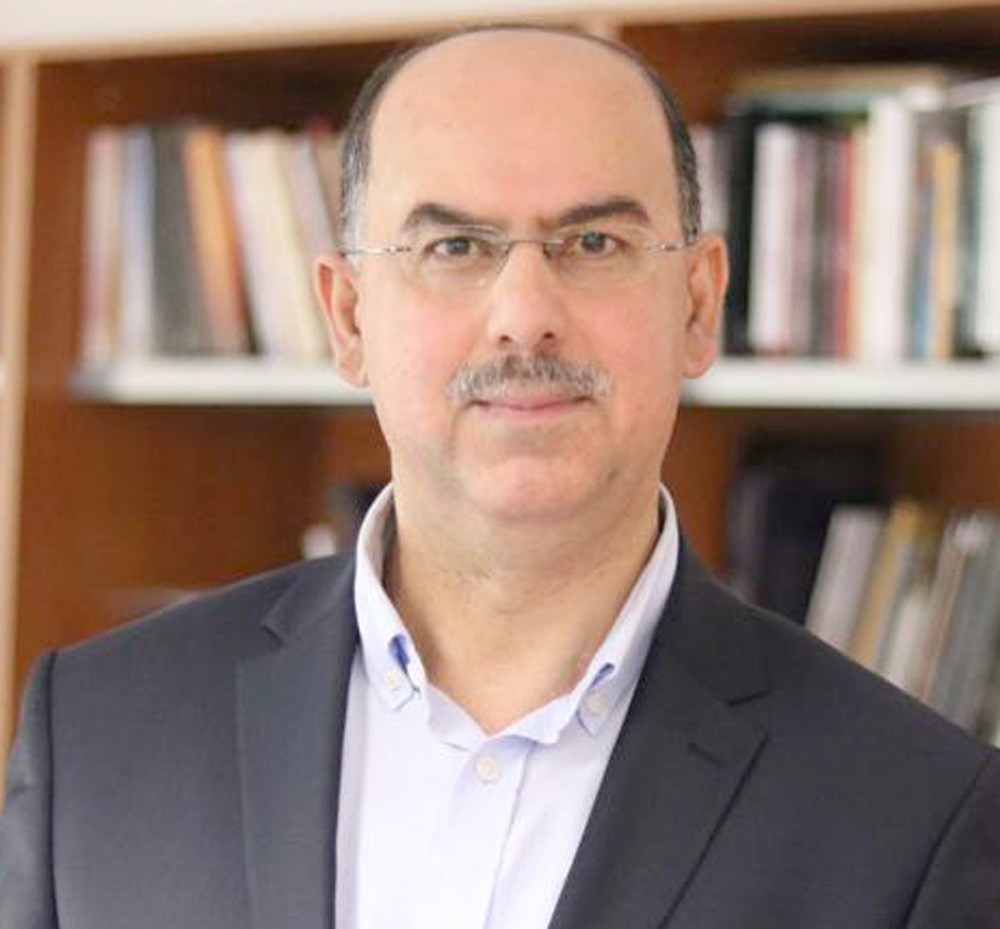
In his recent article in Asharq Al-Awsat, Prince Turki Al-Faisal offers a sober and realistic reading of the balance of power in the Arabian Gulf. With his deep security and diplomatic experience, Prince Turki presents an analysis that commands the attention of observers. Western media often treat his statements as indicators of Riyadh’s strategic mood, despite the fact that he has held no official government position for years.
Prince Turki reminds us that Saudi Arabia possesses the military capability to respond in kind to Iran. Yet any comprehensive retaliation would trigger a scenario of mutual destruction: strikes on Iranian facilities would be met with attacks on Saudi Arabia’s vital infrastructure—from oil installations to desalination plants stretching along the Gulf coast and possibly deep into the country. This is an accurate description of the deterrence equation, not an exaggeration. It underscores that Riyadh—unlike Tehran—understands that sliding into an open war would turn the region into a wasteland and cost thousands of lives, in a conflict that would serve only Israel, which, as the prince notes, has long sought to ignite an Arab–Iranian confrontation that would allow it to dominate the region.
What is often overlooked, however, is that the deterrence equation itself is no longer as stable as it was a decade or two ago. Iran, having built its regional influence through armed proxies in Iraq, Lebanon, Yemen, and Syria, now possesses the ability to expand the battlefield beyond its borders.
Saudi Arabia, meanwhile, relies on an advanced but politically and economically costly defensive architecture. This asymmetry in the tools of power makes any Saudi response highly calculated. Riyadh knows that Iran excels at operating in gray zones and exploiting asymmetric warfare, while any Saudi misstep could be used internationally to portray the Kingdom as an escalatory actor rather than a state defending its security.
Behind this measured and rational framing lie unresolved questions that cannot be ignored. Can Iranian attacks on Saudi Arabia pass without a response—even a limited one designed to reestablish rules of engagement and prevent future strikes? And what would such restraint mean for the future of deterrence in the Gulf?
READ: Israel sent Iron Dome batteries, personnel to UAE during Iran war: US envoy
Then there is the Beijing Agreement between Riyadh and Tehran, in which Iran was presented as a neighbor committed to stability. Yet the attacks that followed raised serious doubts about China’s ability to act as a guarantor—and about the credibility of Iran’s supposed shift in posture. If the agreement succeeded in halting diplomatic tension, did it also halt the Iranian security doctrine built around the concept of Qom Umm al-Qura, the ideological foundation of the Revolutionary Guard’s strategy to shift the center of the Islamic world from Mecca to Qom? Or does this doctrine remain active—taught, reinforced, and operationalized in Iran’s security and intelligence institutions—while Gulf states are left to face a new test each time Tehran’s political mood shifts?
In reality, the Beijing Agreement was not merely a bilateral reconciliation; it was an early test of China’s ambition to play the role of “security guarantor” in the Middle East. Yet Beijing, despite its economic weight, lacks the political and military leverage needed to impose binding commitments on Tehran.
China is a commercial partner to Iran, not a power capable of reengineering its security behavior. Thus, within months, the agreement appeared more like a temporary truce than a strategic transformation—especially as attacks attributed to Iran’s proxies continued. This exposed the limits of China’s role and returned the central question to Gulf capitals: who guarantees whom?
The questions raised by Prince Turki’s article are not objections to Saudi prudence or political restraint. Rather, they are an attempt to understand the limits of Saudi Arabia’s strategic patience—patience that has become the last remaining Arab barrier against Iran’s regional expansionism. Riyadh has already dealt with the reality of the Houthis in Yemen as an Iranian dagger in its side, and it has granted political legitimacy to Iran’s parties and militias in Iraq as the de facto ruling forces there.
Saudi strategic—and economic—patience, as Prince Turki implies, is not an emotional stance but a state-level choice.
A direct confrontation with Iran is not merely a military decision; it is a decision that would reshape the region for decades. Saudi Arabia, having experienced the cost of the Yemen war and lived under the threat of missiles and drones, understands that retaliation is not simply “pulling the trigger,” but redefining the regional security equation.
This is why Riyadh practices a form of “silent deterrence”: building alliances, enhancing defensive capabilities, and recalibrating its international relationships to create an environment in which any Iranian attack becomes a strategic loss for Tehran before it becomes a threat to Saudi Arabia.
The question today is whether de-escalation is a long-term strategic choice—or merely a temporary phase before the rules of the regional game are rewritten once again.
OPINION: Britons now measure politics by the price of a bottle of milk
The views expressed in this article belong to the author and do not necessarily reflect the editorial policy of Middle East Monitor.
 Unless otherwise stated in the article above, this work by Middle East Monitor is licensed under a Creative Commons Attribution-NonCommercial-ShareAlike 4.0 International License. If the image(s) bear our credit, this license also applies to them. What does that mean? For other permissions, please contact us.
Spotted an error on this page? Let us know
Latest news
See all


