
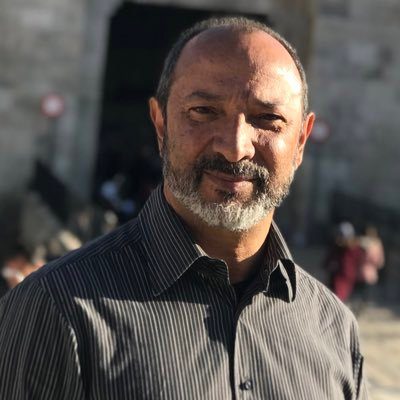
![Brazil's President Luiz Inacio Lula da Silva and Brazil opposition candidate Flavio Bolsonaro. [Photo/AA]](https://i0.wp.com/www.middleeastmonitor.com/wp-content/uploads/2026/09/image-3-1.jpg?fit=920%2C613&ssl=1)
On Sunday, October 4, millions of Brazilians will decide Brazil’s political, economic, and social direction. They will also pit against each other two opposing visions of foreign policy and the country’s very place in the world.
On one side, Luiz Inácio Lula da Silva represents a sovereign diplomacy committed to multilateralism, international law and the self-determination of peoples. On the other, Flávio Bolsonaro presents himself as the heir to his father’s subservience to the United States and the supremacist regime of “Israel”.
Palestine is one of the clearest expressions of this divide. These are irreconcilable projects: sovereignty or submission, solidarity or complicity with oppression and genocide.
Lula’s commitment to Palestine did not arise from the present circumstances.
As I demonstrate in my book Palestine: From the Myth of the Promised Land to the Land of Resistance, during his first terms in office Lula developed a genuine presidential diplomacy in defence of Palestinian self-determination, an Israeli withdrawal from the occupied territories and the establishment of a sovereign state within the pre-1967 borders.
In December 2003, during a visit to Syria, Lebanon, the United Arab Emirates, Egypt and Libya, Lula placed Palestine at the heart of his public statements.
The following year, at the UN General Assembly, he warned that the Palestinian people remained far from achieving the self-determination to which they were entitled.
In March 2010, Lula became the first Brazilian head of state to make an official visit to Palestine. In Ramallah, he laid flowers at Yasser Arafat’s mausoleum and inaugurated Brazil Street outside the headquarters of the Palestinian Authority.
Despite pressure to do so, he refused to pay tribute to Theodor Herzl, the founder of the Zionist movement. The gesture showed that Brazilian diplomacy could engage with all parties without surrendering its dignity or placing the occupier and the people subjected to occupation on the same footing.
The culmination came on 1 December 2010, when Lula formally recognised the State of Palestine within the 1967 borders. This was not merely a symbolic decision. The initiative prompted a wave of recognitions and, within a few months, virtually every South American country had followed Brazil’s lead.
Faced with the genocide in Gaza, Lula returned to this tradition and became one of the first heads of state to call Israeli crimes by their name: genocide.
While Western leaders repeated the false claim of a “right to self-defence”, the Brazilian president denounced the killing of children, the use of starvation as a weapon, the destruction of hospitals and the forced displacement of the Palestinian population.
READ: Brazil’s Lula warns of lasting impact of Gaza war and criticises UN inaction
On each of the ten occasions when he opened the General Debate of the UN General Assembly, Lula placed Palestinian rights among the central issues demanding a response from the international community and the Security Council.
In his tenth address, he once again denounced the genocide in Gaza, condemned the war crimes of the Netanyahu government and reaffirmed that peace would be possible only with a free and sovereign Palestine. This consistency is not rhetorical; it reflects a political conviction sustained over decades.
There is, however, a contradiction that must be confronted. Even as he denounces the crimes of “Israel” in Gaza and the West Bank, Lula continues to repeat the mistaken characterisation of Palestinian resistance as “terrorism”, overlooking the fact that the UN Charter guarantees oppressed and colonised peoples the legitimate right to defend themselves.
Flávio Bolsonaro offers the opposite path. He visited “Israel”, met Netanyahu and accused Lula of antisemitism for condemning the massacre in Gaza. As I have written on several occasions, conflating criticism of “Israel” with antisemitism is not an innocent conceptual error. It is a deliberate choice intended to shield the Zionist regime’s supremacist project of settler colonialism in occupied Palestine.
Netanyahu’s appearance, through a recorded message, at the launch of Flávio’s candidacy revealed something more serious still. The prime minister of a foreign “state”, internationally accused over crimes committed against the Palestinians, publicly expressed support for a candidate for the Brazilian presidency.
The convergence of Netanyahu, Donald Trump, Javier Milei and Bolsonarismo reflects an international far-right alliance seeking to place Brazil once again under the tutelage of the US and “Israel”.
Meanwhile, Lula was welcomed with a red carpet by New York Mayor Zohran Mamdani, a representative of a political generation that denounces violence against the Palestinians and recognises the importance of the Global South.
In 2026, Palestine will inevitably be on the Brazilian ballot.
It will not simply be a choice between two candidates, but between dignity and complicity – between a Brazil that denounces genocide and one prepared to roll out the red carpet for criminal Zionists.
Supporting a “state” that exterminates civilians, weaponises hunger, commits crimes against humanity and attempts to interfere in Brazilian politics in favour of its preferred candidate is not a diplomatic position. It is a morally indefensible choice. Flávio Bolsonaro represents that choice.
Supporting Lula in this contest means preventing Brazil from once again kneeling before those who occupy and massacre Palestine, and who seek to erase the Palestinian people from their land and from existence itself.
OPINION: When the left speaks the language of Empire against Iran
The views expressed in this article belong to the author and do not necessarily reflect the editorial policy of Middle East Monitor.
 Unless otherwise stated in the article above, this work by Middle East Monitor is licensed under a Creative Commons Attribution-NonCommercial-ShareAlike 4.0 International License. If the image(s) bear our credit, this license also applies to them. What does that mean? For other permissions, please contact us.
Spotted an error on this page? Let us know
Latest news
See all


