
![A group of detainees kneel in Guantanamo Bay, Cuba on 28 October 2009 [John Moore/Getty Images]](https://i0.wp.com/www.middleeastmonitor.com/wp-content/uploads/2021/04/GettyImages-92477338.jpg?fit=920%2C613&ssl=1)
I know this road. I have its map etched into my bones. I carry scars that won’t heal without justice, without accountability.
I learned it in Guantánamo, when the only thing left that I could control was my own body.
We were disappeared. Isolated. Turned into silence. Our words were redacted. Our letters were stamped secret. Lawyers were blocked. Time stretched and rotted. No court dates. No real charges. No end.
I was reduced to a number in an orange uniform, locked in a metal cage. The US government had already named me. “The worst of the worst.” “Terrorist.” “Enemy combatant.” Labels designed to make torture sound necessary.
And torture came. Day and night. Relentless. Mechanical. Meant to break the mind first, then the body. So I stopped eating. Not as a gesture. Not as a plea. I stopped because everything else had been taken. My body was the only territory the state hadn’t yet occupied.
Hunger strike is not symbolic. It is not dramatic. That’s a lie sold by the media, by people who have never watched a body collapse from the inside, who turn slow death into headlines and panels and clean sentences.
A hunger strike is slow. It hurts. It dismantles you piece by piece. Muscles shrink. Vision fades. The heart stutters. Organs begin to fail. Every beat is a warning. Every hour drags you closer to death, whether you want it or not.
A hunger strike begins when every other door is slammed shut. When the system makes it clear your life has no value, as long as you stay quiet and obedient. When it looks straight at you and tells you you’re already dead.
So, you answer with your body.
At least eight imprisoned pro Palestine activists in the UK have refused food. Some have passed fifty days without eating. Some have already been taken to hospital. They’re scattered across prisons, cut off from each other, torn from their families, buried under the word terrorist so cruelty can be dressed up as law.
I have lived inside this story before. They are meant to strip you of your humanity so the public doesn’t have to feel the sting of your suffering.
When Jeremy Corbyn raised the hunger strike in Parliament, some MPs laughed. Laughed. Not whispered. Not quiet discomfort. Open mockery. Smirks from padded seats while people’s bodies were breaking down in cells. While people were collapsing, being dragged to hospital wards, organs failing. This is power untouchable.
And David Lammy, the Deputy Prime Minister, refused to meet the families. Refused even the barest human gesture of listening. Families who know their loved ones’ bodies are breaking down. The response? A closed door. Silence dressed up as procedure. Cowardice wrapped in protocol. This is deliberate contempt.
In 1981, during the Irish Hunger Strikes, men were dying in prison cells while politicians dismissed them as criminals, attention-seekers, terrorists. The mockery came first. The jokes. The coldness. The refusal to engage. Then came the funerals. Power always laughs before it kills. Humour becomes a shield for cowardice.
Nothing has changed. The accents are different. The suits are better tailored. The cruelty is the same.
This is not democracy. This is rot at the center of the state.
We were held for years in Guantánamo without charges, without evidence, without a path to release. In the UK today, people are kept on extended remand, sometimes for years, while trial dates are pushed further away. Time itself becomes the punishment. Time becomes a weapon. A weapon against prisoners and their families.
Isolation comes next. In Guantánamo, isolation was designed to break us. Months, sometimes years, without meaningful human contact. Silence so heavy it pressed against your skull. A silence meant to erase you. In UK prisons, hunger strikers are separated. Transferred. Harassed. Stripped of routine, stripped of connection. Isolation is framed as safety. It is not. It is punishment. It is control.
Then comes censorship. Letters delayed. Phone calls cut short. Visits restricted. Information filtered. Families left in the dark. Lawyers forced to fight for the barest access. At Guantánamo, every word leaving the camp was monitored. In the UK, the same instinct survives. Control the narrative. Control the person.
Then comes medical coercion. In Guantánamo, hunger strike was met with force. Shackles. Restraint chairs. Tubes forced through noses into stomachs while guards pinned our limbs. They called it medical care. It was violence. Pure, deliberate, crushing violence designed to make resistance unbearable.
Hunger strike happens when every other option has been stripped away. People do not starve themselves casually. They do it when complaints go nowhere. When courts delay. When silence becomes policy. At Guantánamo, hunger strike was one of the last ways to say, “I am still here. I still exist. You have not erased me yet.”
That language has crossed the ocean. The UK likes to pretend Guantánamo was an American mistake. Something distant. Something finished. It was not. It was a laboratory. The experiments were exported. Absorbed. Normalized. And now, they are alive inside their prisons.
You see it in extended remand. You see it in proscription laws twisted to criminalize protest. You see it in prisons used as warehouses, places to store people indefinitely while the state takes its time building a case.
And you see it in the quiet cooperation between systems. Guantánamo fed the black sites. Black sites fed domestic counterterror policing. The same logic shows up again and again. In places like Alligator Alcatraz in Florida. In British prisons holding political activists under terrorism laws. Different flags. Same playbook.
Abuse travels faster than accountability. I have watched governments study each other. Share techniques. Refine the language. Learn how to cage people legally. How to stretch the law without snapping it. How to crush dissent while calling it order.
This is not about agreeing with the politics of the prisoners. This is about whether a state is allowed to disappear people before trial, isolate them, censor them, then punish them for refusing to cooperate with their own erasure.If the UK wants to claim it is nothing like Guantánamo, then it has to prove it with action.
End prolonged remand without trial. No one should lose years of their life waiting for a courtroom.
End isolation as a response to protest. Restore full access to lawyers and families.
Provide medical care that protects life, not policies that quietly endanger it.
Listen to the hunger strikers. Meet their families face to face instead of hiding behind procedures and silence.
Abolish the terror laws used to criminalize dissent, stretch guilt by association, and disappear people behind language instead of evidence. Force Members of Parliament to step out of silence and take responsibility for what is done in their name.
These are not radical demands. They are the bare minimum. The floor, not the ceiling, for any society that claims to respect human rights.
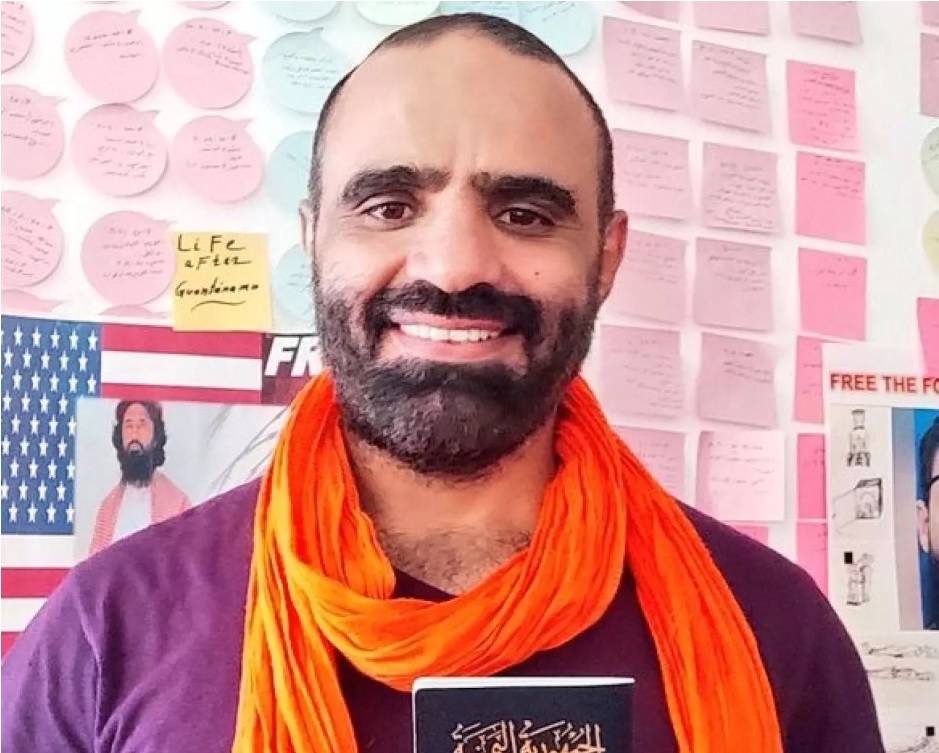
I survived Guantánamo. I know what happens when governments decide some lives are expendable. I know how quickly temporary measures harden into permanent systems. I know how hunger strikes are mocked, ignored, managed, until bodies begin to fall and it’s too late to pretend surprise.
The UK is closer to that edge than it wants to admit. Closer than it will say out loud.
I am not writing this as an observer. I am writing as someone who has already lived the ending. I am telling you plainly, without euphemism and without distance. Systems like this do not correct themselves. They do not slow down out of shame. They only stop when they are confronted, directly and without fear. Now.
I refuse to be silent. I am joining this hunger strike in solidarity. I do this because I recognize the system at work. I do this because I know Guantánamo did not end, it spread. It embedded itself in other prisons, other laws, other governments that tell themselves they are better. I do this because standing with the oppressed against the oppressor is not symbolic for me. It is a responsibility earned through survival. I do this because I am able to, and because doing nothing would make me complicit.
This hunger strike is not about food. It is about dignity. It is about justice. It is about remand used as punishment, silence used as policy, and a state that believes if it waits long enough, people will break and disappear. It believes silence will protect it, shield it, absolve it. It will not.
I stand with the hunger strikers. I will not look away. I will not soften this. I will not be polite about slow death carried out in clean buildings and legal language.
And I will not let them be erased.
OPINION: Guantanamo prisoners and the International Day of the Victims of Enforced Disappearances
The views expressed in this article belong to the author and do not necessarily reflect the editorial policy of Middle East Monitor.
 Unless otherwise stated in the article above, this work by Middle East Monitor is licensed under a Creative Commons Attribution-NonCommercial-ShareAlike 4.0 International License. If the image(s) bear our credit, this license also applies to them. What does that mean? For other permissions, please contact us.
Spotted an error on this page? Let us know
Latest news
See all


