
![Head of Hamas' Office for Relations with the Arab and Islamic World Khalil al-Hayya gives a speech during funeral ceremony, held for Hamas political chief Ismail Haniyeh on August 1, 2024 [Iranian Leader Press Office/Anadolu via Getty Images]](https://i0.wp.com/www.middleeastmonitor.com/wp-content/uploads/2024/08/GettyImages-2164126513-e1723059794103.jpg?fit=920%2C613&ssl=1)
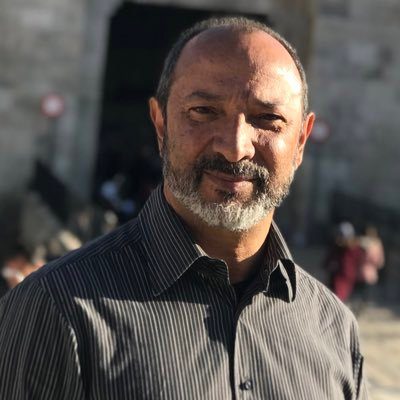
The election of Dr Khalil al-Hayya as head of Hamas’s Political Bureau represents far more than a change of leadership. It signals the movement’s entry into a new political phase, shaped by the war on Gaza, the systematic assassination of its leaders and the struggle over who will shape Palestine’s future once the conflict ends.
For nearly two years, Israel has pursued what it calls a strategy of “decapitating” Hamas’s leadership. The assassinations of Ismail Haniyeh, Yahya Sinwar and other senior figures were intended to fragment the movement and undermine its command structure.
Al-Hayya’s election points in the opposite direction. Despite its losses, Hamas has preserved its institutional framework and demonstrated its ability to renew its leadership through its own internal mechanisms.
The electoral process, conducted over several rounds and in accordance with the movement’s internal regulations, reinforces the image of an organisation whose political continuity does not depend solely on individual leaders, but on consolidated institutions.
Al-Hayya’s selection also reveals a reordering of Hamas’s priorities. Although he belongs to the movement’s founding generation and enjoys strong legitimacy rooted in the Gaza Strip, his profile differs from that of Yahya Sinwar.
In recent years, Al-Hayya has become one of the main figures responsible for indirect negotiations with Israel and for contacts with Qatari and Egyptian mediators. He has also participated in the inner circle responsible for formulating the movement’s strategic decisions.
His experience suggests that the next phase will be marked by an intense diplomatic struggle.
A permanent ceasefire, prisoner exchanges, the lifting of the blockade, the entry of humanitarian aid and Gaza’s reconstruction are likely to move to the centre of Hamas’s political agenda, without implying the abandonment of its strategy of resistance.
Several Palestinian analysts view Al-Hayya’s election as an expression of this new hierarchy of priorities: responding to the humanitarian emergency while preserving the movement’s fundamental political principles.
This orientation also explains Al-Hayya’s ability to move between two central poles of regional politics.
On one side stands Qatar, the main mediator in negotiations involving Hamas, Israel, the United States and Egypt. On the other are Iran and the Axis of Resistance, which remain the movement’s principal political and strategic support network.
His election suggests that Hamas intends to strengthen both its negotiating capacity and its regional alliances, rejecting the false dichotomy between diplomacy and resistance.
At the same time, the succession is connected to another strategic development already underway: Hamas’s willingness to transfer Gaza’s civilian administration to a Palestinian National Committee.
This initiative indicates that the movement is seeking to distinguish more clearly between three dimensions of its activity: armed resistance, political and diplomatic leadership, and territorial administration.
It represents a profound reorganisation, perhaps the most important since Hamas assumed control of Gaza in 2006.
In this context, Khalil al-Hayya was not chosen merely because of his personal trajectory, but because he possesses the attributes considered essential for this transition.
A historic Hamas leader deeply rooted in Gaza, an experienced negotiator and a survivor of repeated assassination attempts that killed several members of his family, he combines internal legitimacy, organisational experience and diplomatic capacity.
The political message of his election is directed at four audiences.
For Israel, it demonstrates that the physical elimination of leaders has not been sufficient to dismantle the movement.
For Palestinian society, it reaffirms Hamas’s ability to preserve its cohesion even under the most adverse circumstances.
For regional actors, it indicates that the organisation will remain a central force in Palestinian politics.
And for the United States, Al-Hayya’s election reinforces the reality that any lasting solution for Gaza will find it difficult to bypass a movement that, despite the war, has preserved its structure, renewed its leadership and retained its negotiating capacity. Excluding it from the political equation now appears as unlikely as defeating it militarily.
If Yahya Sinwar symbolised the Hamas of war, Khalil al-Hayya may come to symbolise the Hamas of the post-war era: less identified with the administration of Gaza and more focused on rebuilding its position as a national Palestinian actor and a central force in the political struggle over Palestine’s future.
The views expressed in this article belong to the author and do not necessarily reflect the editorial policy of Middle East Monitor.
 Unless otherwise stated in the article above, this work by Middle East Monitor is licensed under a Creative Commons Attribution-NonCommercial-ShareAlike 4.0 International License. If the image(s) bear our credit, this license also applies to them. What does that mean? For other permissions, please contact us.
Spotted an error on this page? Let us know
Latest news
See all


