


“This election was a defeat for denialism and lies.” With these words, Brazilian President Luiz Inácio Lula da Silva, widely known as Lula, celebrated his victory in the presidential election runoff on 25th October 2026, securing a historic fourth non-consecutive term in office. Lula defeated his far-right rival Flávio Bolsonaro, son of former President Jair Bolsonaro, with 51.79 per cent of the vote against 48.21 per cent.
Brazilian President Luiz Inácio Lula da Silva’s re-election has reinforced the position of one of Latin America’s most outspoken critics of Israel and strongest supporters of Palestinian statehood, with political observers saying the result could reshape Brazil’s relations with Israel, the United States and the wider Global South.
Lula’s victory, however, comes at a critical moment for Latin America, amid the growing influence of right-wing political movements, shifting presidential leadership across the region and major developments in Venezuela following the US capture of President Nicolás Maduro in January 2026.
Against this changing political landscape, Lula’s re-election raises important questions about the future of Brazil’s support for Palestine and whether his government will maintain its outspoken opposition to Israeli policies in the face of mounting regional and international pressures.
The election also comes amid growing political divisions over Israel’s war on Gaza, with Brazil having emerged under Lula as one of the most vocal critics of Israeli military operations and a leading advocate for the establishment of an independent Palestinian state.
READ: Chile passes law establishing annual day of friendship and solidarity with Palestine
However, with right-wing forces gaining ground in parts of Latin America and Washington seeking to strengthen its influence across the region, questions remain over how far Lula will be able or willing to pursue an independent foreign policy, particularly regarding Palestine and relations with Israel.
More importantly, will Brazil’s support for the Palestinian cause translate into concrete political and economic measures, or will it remain largely confined to speeches and condemnations at international forums?
Despite Lula’s repeated accusations that Israel is committing genocide in Gaza, economic relations between Brazil and Israel have continued, including trade in oil and other sectors. This has prompted criticism from Palestinian solidarity movements calling for a stronger response.
The central question is whether Lula’s new administration will consider measures such as suspending oil exports, ending military cooperation, restricting trade or downgrading diplomatic relations with Israel, or whether economic and strategic interests will continue to limit Brazil’s response.
These questions have gained particular significance following Netanyahu’s public support for Lula’s rival, Flávio Bolsonaro, whose election campaign promised to restore closer relations with Israel.
In this context, Lula’s fourth presidential term represents a test not only of Brazil’s position on Palestine but also of its ability to maintain an independent diplomatic role in a region undergoing significant political realignment.
President Luiz Inácio Lula da Silva came from behind to win Brazil’s runoff election, halting a right-wing wave sweeping Latin America and defying predictions that the 80-year-old political veteran had finally reached the end of his extraordinary career. https://t.co/JXcHOl5s84
— Bloomberg (@business) October 25, 2026
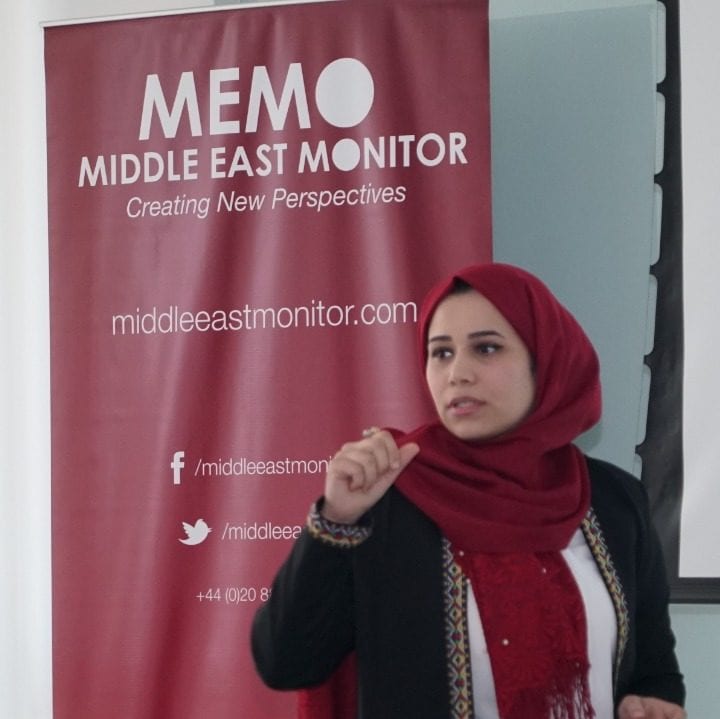
Speaking to MEMO, Brazilian journalist and international relations specialist Pedro César Batista said Lula’s victory extends beyond domestic politics, describing it as “part of the global geopolitical struggle”, with implications for Brazil’s support for Palestine.
According to Batista, the election also represents a setback for US President Donald Trump and the international far-right political movement. “The defeat of Flávio Bolsonaro is also a defeat for Donald Trump and his policy of seeking to dominate the region,” he said.
Batista argued that Lula’s victory weakens an international political alliance involving far-right movements and creates an opportunity for Brazil to adopt a stronger international position.” Lula now has the opportunity to strengthen his role as an international leader in the struggle against imperialism, fascism and Zionism”.
Batista believes the Palestinian question will be among the most important tests of Lula’s foreign policy during his fourth presidential term, particularly regarding whether political statements will be translated into concrete measures.
“Lula has always maintained a very close relationship with Palestine,” Batista said, pointing to the Brazilian president’s positions since the beginning of Israel’s war on Gaza in October 2023. He noted that Lula had repeatedly condemned Israeli military operations and publicly described the situation in Gaza as genocide.
“What we expect is for Brazil to strengthen its defence of a free and sovereign Palestinian state and to effectively support the struggle of the Palestinian people,” he completed.
BRAZILIAN PRESIDENT LULA:
“IN THE SAME WEEK THAT I WON, NETANYAHU LOST IN ISRAEL, AND IT SEEMS MY FRIEND TRUMP IS LOSING IN THE US”
“The Brazilian people woke up and said: Brazil WILL NOT accept being anyone’s backyard” https://t.co/Qzx9Z8KLbt
— Sulaiman Ahmed (@ShaykhSulaiman) November 6, 2026
Batista stressed that the new presidential term offers an opportunity for Brazil to take a more active role in supporting Palestinian self-determination and confronting Israeli policies. Despite Lula’s strong criticism of Israel’s war on Gaza, Batista expressed concern over the continuation of economic and military relations between Brazil and Israel. He said commercial exchanges, particularly oil exports and certain defence-related transactions, remained a serious concern for Palestinian solidarity movements.
“Brazil has continued sending oil to Israel, and there are still relations involving the arms industry,” Batista told MEMO.
He argued that maintaining such commercial relations contradicts Brazil’s political condemnation of Israeli military operations and undermines efforts to hold Israel accountable. “What we want from Lula’s government is that it stops sending oil to Israel and takes concrete measures in support of the Palestinian people,” he said.
Although the Brazilian government has previously suspended or reviewed certain defence-related agreements and transactions involving Israel, official trade figures indicate that commercial relations between the two countries have continued.
It is worth mentioning also that the Palestinian solidarity movements would continue pressing the government to adopt stronger measures during Lula’s new term. Batista emphasised that political support for Palestine should be reflected in economic and diplomatic decisions rather than remaining limited to public declarations.
Brazilian President Lula hailed his reelection as a global victory, declaring that Brazil refuses to be anyone’s backyard, while pointing to political setbacks for Trump in the US and Netanyahu in “Israel”.
https://t.co/au48vCpshT— Al Mayadeen English (@MayadeenEnglish) November 6, 2026
Experts see that Lula’s re-election may have dealt a blow to the political influence of Donald Trump and Benjamin Netanyahu in Brazil, but it has not weakened the far-right movement enough to remove its influence over the country’s political future. For Brazilian journalist and international relations specialist Pedro César Batista, the challenge now is not only to confront these forces but also to ensure that Lula’s support for Palestine goes beyond political statements and translates into concrete action. “Without a doubt, Lula’s election reduces the influence of Netanyahu and Donald Trump here in Brazil”.
READ: Pro-Palestine protests sweep Latin America as Brazil’s presidential race intensifies
However, he warned that Bolsonaro’s electoral defeat does not mean the disappearance of the political movement associated with the former president’s family. “Bolsonarism remains organised and has real strength within Brazilian society and its institutions,” he said.
According to Batista, maintaining pressure on Lula’s government and confronting the political influence of far-right movements will remain important priorities for progressive organisations and supporters of Palestinian rights. “The Zionist entity, whether Netanyahu or anyone else is in power, will continue adopting the same position towards the Palestinian people,” he said.
He added that any new Israeli government would need to be assessed according to its actions, but argued that Israel’s policies were rooted in broader political structures rather than the position of one individual leader. He argued that meaningful changes in the Palestinian situation would require sustained international political pressure rather than relying solely on electoral developments within Israel.
The views expressed in this article belong to the author and do not necessarily reflect the editorial policy of Middle East Monitor.
 Unless otherwise stated in the article above, this work by Middle East Monitor is licensed under a Creative Commons Attribution-NonCommercial-ShareAlike 4.0 International License. If the image(s) bear our credit, this license also applies to them. What does that mean? For other permissions, please contact us.
Spotted an error on this page? Let us know
Latest news
See all


