

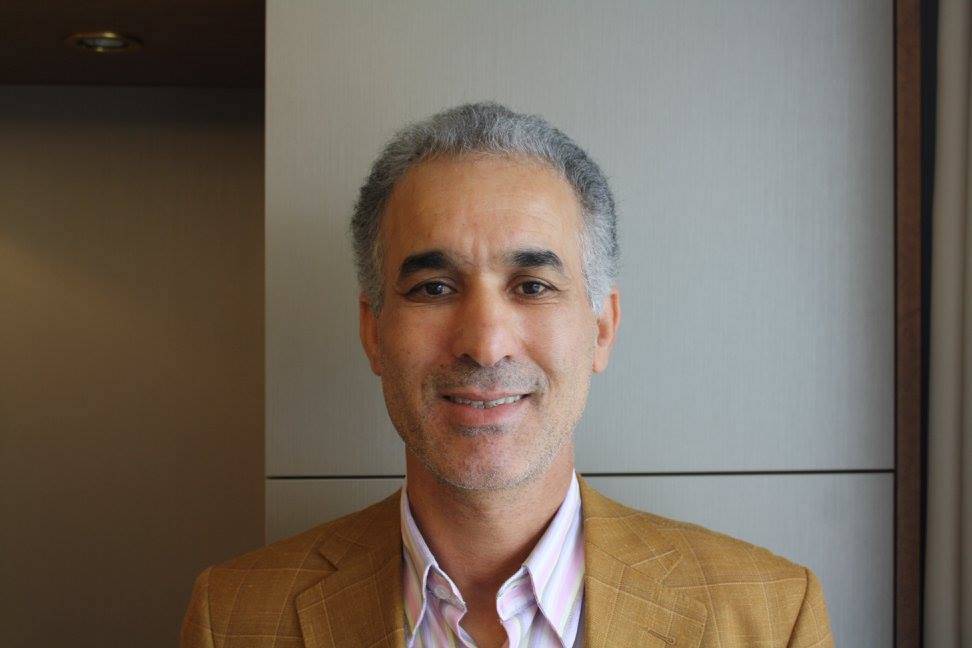
![Libyan Foreign Minister Najla al-Mangoush speaks during a press conference in Ankara, on February 13, 2023 [ADEM ALTAN/AFP via Getty Images]](https://i0.wp.com/www.middleeastmonitor.com/wp-content/uploads/2023/08/GettyImages-1247105722-scaled-e1693230475894.jpg?fit=920%2C614&ssl=1)
When news broke, in 2023, that Libya’s first female foreign minister, Najla Al-Mangoush, had secretly met her Israeli counterpart, Eli Cohen, in Rome, most Libyans were stunned. It was, as far as is publicly known, the first official meeting between the two countries and the first known high-level diplomatic contact between Libya and Israel. It was not an accidental encounter or a chance meeting, but a deliberately arranged session with a specific agenda — apparently, both sides wanted the meeting.
That distinction is crucial to understanding what became known as the Mangoush affair. The significance of the meeting was not simply that a Libyan foreign minister had spoken to an Israeli foreign minister. It was that the episode exposed a fundamental contradiction in new Libya’s foreign policy: what government officials might be prepared to discuss quietly with foreign powers is not necessarily what they can defend publicly before their people.
Israel’s foreign minister at the time chose to disclose the secret meeting, prompting a protest from the Biden administration, which had wanted the meeting to remain secret.
When Cohen disclosed it on 27 August 2023, the reaction in Libya was immediate. Mangoush was suspended and then dismissed; protests erupted in Tripoli and other cities; and she left the country amid fears for her safety.
The episode therefore became much more than a diplomatic embarrassment. It demonstrated the power of the Libyan street — and its ability, under certain circumstances, to shape or even veto the country’s foreign-policy choices when a deeply entrenched red line is crossed. Palestine is one such red line.
Almost two years later, after the affair appeared to have disappeared from the news, Al-Mangoush, in an attempt to explain herself, spoke in January 2025 in an interview with Al Jazeera’s Atheer podcast, giving her first detailed account of what had happened. She insisted that the meeting with Cohen was not her personal initiative but had been coordinated and arranged by the Tripoli-based Government of National Unity. She claimed to have acted on her boss’s orders and met Cohen with a specific agenda, rejecting the suggestion that the meeting had been intended to pave the way for normalisation with Israel.
Her account contradicted Abdul Hamid Dbeibah, the prime minister, who had denied that he authorized her to meet the Israeli official. It also directly challenged the official version presented after the scandal erupted in August 2023, when the Libyan government sought to portray the encounter as an informal and unplanned meeting. Sensing the public anger, both Dbeibah and his government sought to distance themselves from the scandal.
In 2026, Mangoush has returned to the public scene — this time not to discuss the Cohen affair, but through a podcast of her own dealing with diplomacy, negotiation, risk management and conflict resolution. Her reappearance, despite coming nearly three years after her dismissal, has inevitably revived memories of the episode that ended here ministerial job while earning her the wrath of the people across the country. The affair had not disappeared; it had simply fallen out of the news. Her return to the public arena has brought it back into view.
READ: Libyan leaders discuss advancing political process to end transitional phases
For Libyans, opposition to any form of normalization with Israel has deep roots both legally and historically.
Legally speaking Libya’s official position toward Israel long predates Muammar Gaddafi. After independence in 1951, the Libyan monarchy aligned itself with the broader Arab position on Israel and, in 1957, enacted Law No. 62 on the boycott of Israel, prohibiting agreements and commercial, financial and other dealings with Israeli persons and entities.
The law was subsequently amended, but the principle of boycott remained in place. When Gaddafi came to power in 1969 he made the Palestinian issue an essential component of Libya’s foreign policy while helping Palestinians in all possible ways.
For Libyans, however, Palestine has never been simply a distant humanitarian cause. Its place in the national consciousness is rooted in religion, in schools and in the history of the Arab-Israeli conflict, but also in something more tangible: Libyans themselves went to Palestine and fought there. In 1948, despite Libya’s own political weakness and the fact that the country was still under Western control, individual Libyans volunteered to fight in Palestine. The Libyan Centre for Archives and Historical Studies has documented the participation of Libyans in the war and says it holds more than 700 individual files containing documents, photographs and testimonies of participants.
One of the most prominent volunteers was Muhammad Tariq al-Afriki, a military officer who joined the Palestinian fighters in 1948. Palestinian historical sources record his participation in battles including Majdal and al-Faluja, and his later command of Palestinian fighters in the Jerusalem area. He recorded his experience in a memoir and took part in some forty battles against Zionist gangs fighting to create today’s Israel on Palestinian land. This history is not an abstraction for many Libyans. Families across the country have stories of relatives who volunteered, fought and, in some cases, died in Palestine — a connection that helped make the Palestinian cause part of Libya’s own historical memory, rather than simply an expression of sympathy for people living far away.
The sensitivity of the issue was already evident during the 2011 uprising. At a time when Libya was still consumed by its civil war and its future political order was still uncertain, Bernard-Henri Lévy, the French self-styled philosopher, who had become a prominent foreign advocate of the anti-Gaddafi rebellion, raised the possibility of a future Libya recognizing Israel. After meeting Israeli Prime Minister Benjamin Netanyahu, Lévy told AFP that the new Libyan authorities would be concerned with Israel’s security if they came to power — a statement that was understood as suggesting possible recognition of Israel. Despite the subsequent denial by the new authorities, the episode left a lasting perception among many Libyans that the emerging post-Gaddafi government was considering, or at least open to considering, normalization with Israel—providing context for what Mangoush did years later.
The episode is significant because it occurred even before the fall of Gaddafi. The NTC was presenting itself as the political authority of a future Libya, yet the possibility of recognizing Israel was politically sensitive enough for its leaders to publicly distance themselves from it.
More than a decade later, the Mangoush affair showed how little room there was for such a position to be discussed openly. A Libyan government may explore such a possibility behind closed doors, but bringing it into the open and making a policy is another matter entirely.
OPINION: From Sabra and Shatila to Gaza: The cost of impunity
The views expressed in this article belong to the author and do not necessarily reflect the editorial policy of Middle East Monitor.
 Unless otherwise stated in the article above, this work by Middle East Monitor is licensed under a Creative Commons Attribution-NonCommercial-ShareAlike 4.0 International License. If the image(s) bear our credit, this license also applies to them. What does that mean? For other permissions, please contact us.
Spotted an error on this page? Let us know
Latest news
See all


