

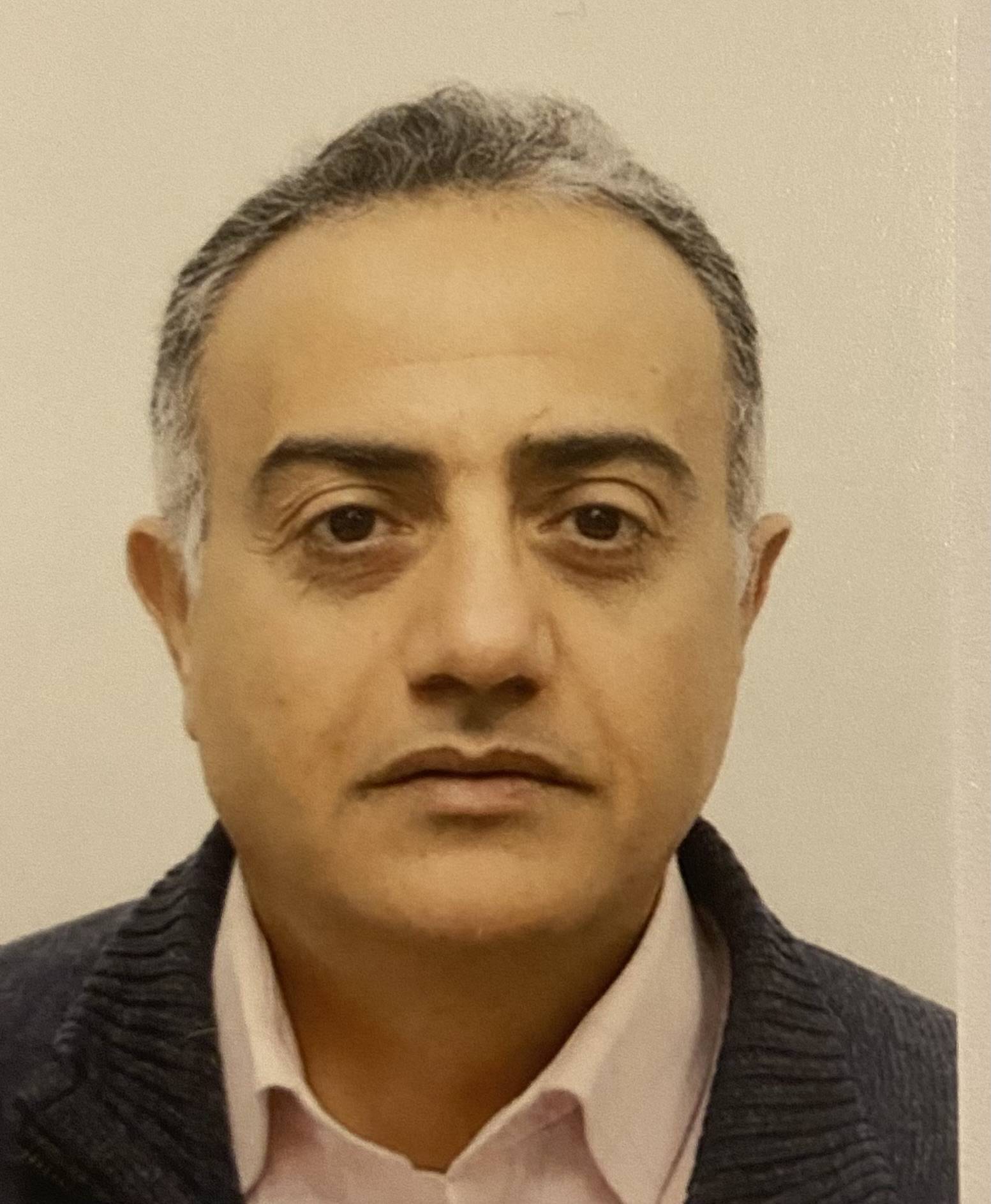
![Former President of Egypt Hosni Mubarak on 23 March 2007 [Zekeriya Albayrak/Anadolu Agency]](https://i0.wp.com/www.middleeastmonitor.com/wp-content/uploads/2020/02/20200225_2_41026258_52485852-e1583155125261.jpg?fit=920%2C614&ssl=1)
A British report predicted the fall of Hosni Mubarak’s regime in Egypt 17 years before the 2011 revolution, newly unearthed UK documents reveal.
The documents show that while the UK advised supporting Mubarak’s regime through internal political and economic challenges in the mid-1990s, it also warned that Egyptians merely wait “for the good moment” to overthrow Pharaonic-style rulers.
In 1995, fourteen years after Mubarak took office, David Blatherwick, the British ambassador to Egypt, concluded that the country was “drifting.” His report, unearthed by MEMO in the British National Archives, was sent to the UK Foreign and Commonwealth Secretary after he came back as ambassador to Egypt-where he served as the head of chancery between 1977 and 1980.
In 1991, the Mubarak government had launched its Economic Reform and Structural Adjustment Program to address Egypt’s worsening economic situation. Following Egypt’s military participation in the Gulf War to liberate Kuwait from the Iraqi occupation, the Egyptian foreign debt fell to 64 per cent of GDP. This sparked “changes for the good” which included visible improvements: upgraded infrastructure, better roads, reliable water, electricity, sewage systems, and particularly improved telecommunications. Blatherwick credited these gains partly to “well spending some of US and UK aid” to Egypt.


At the time, inflation had dropped below 10 per cent, the exchange rate was stable, annual growth was about 2.5 per cent, and foreign reserves exceeded $18 billion. The Egyptian pound, once heavily regulated, became fully convertible. Blatherwick noted that such progress had been “unthinkable” when Mubarak took over after Anwar Sadat’s assassination.
The report outlined two contrasting economic approaches: Firstly, full market liberalisation, exposing domestic firms to global competition. Its supporters argued that the restructuring is painful but necessary. Secondly, a cautious, state-managed expansion of the private sector to preserve the control.
READ: Iran removes street name honouring Egyptian presidents assassin amid diplomatic shift
Mubarak, Blatherwick wrote, “sat on the fence,” fearful of the political and social fallout of restructuring. With already high unemployment—especially among middle-class graduates—the privatisation program “stagnated”.
Blatherwick painted a bleak picture of Egypt’s political landscape, describing Mubarak as a pharaoh and “all important decisions, and many others, goes to (him) personally”. Surrounded by people “who, mostly, protect him from bad news or unwelcome advice”, Mubarak and his government failed to “project a caring image” or “give the poor some hope”. The president has also for years “the object of the kind of sycophantic adulation which must turn the strongest head”. Mubarak had, the ambassador noted, “run out of steam and ideas,” and Egypt was like a “supertanker drifting.”
Mubarak’s government claimed to have transformed the political scene, but the ambassador’s report disagreed. It noted that Mubarak might have had instincts “for democracy and free speech—except when it concerns himself.” In reality, the regime relied on “paternalistic control.” as the ruling National Democratic Party (NDP) monopolised power, influence and patronage. As result, the Blatherwick noticed, genuine political dialogue was virtually non-existent.
Although most political currents had parties—except the Islamists—these legal opposition groups were “small and powerless” and “they know it” the report said.
Corruption plagued the cabinet and “inflicted Mubarak’s family”. Islamists, especially the Muslim Brotherhood (MB), capitalised on public anger over corruption and poor economic conditions to build support.
Credible observers at the time believed that in free elections, the MB could win 25–30 per cent of the vote. However, the NDP would still win— would still win “because pf the patronage factor, apathy, the instinct to follow the pharaoh”.
During his discussion with contacts, Blatherwick heard from Egyptians who believed the country could become a mature democracy if Mubarak would “let go of the apron strings.” Others were more cynical, claiming “Egyptians will never change” and that only the Pharaonic model could work. Blatherwick disagreed, writing that “at the good moments, I almost believe they are wrong.” In Egypt, he observed, “everything is difficult, but nothing is impossible.”
The ambassador concluded Mubarak had two alternatives: to open up the economy and the political scene together and risk the consequence’s, or to go slow on economic reform and hold down the lid internally hoping the slower track will succeed. Blatherwick expected the president to choose the latter.
READ: Egypt moves to block ‘tent city’ project in Gaza following presidential directive
Blatherwick emphasised that true development—not just money—was key to Egypt’s stability. the country “awash with money”, he said, adding that it didn’t need massive aid projects. The Egyptians officials acknowledged to the ambassador privately that even the $2 billion in annual US aid accounted for less than 5 per cent of GDP. So, Egypt needed “to wean off its addiction to aid.”
The report did not rule out the possibility of a military coup to change the status quo under Mubarak. It predicted that such a coup could be led by officers dissatisfied with Mubarak’s pro-American policies — or, more likely, by those concerned about the declining living standards within the armed forces and Mubarak’s uncertain handling of economic and social issues. As a military man himself, Mubarak was careful not to alienate the army’s leadership. As a result, he “would probably shy off any economic measures essential for reform if they were proved unacceptable to the army”.
The report acknowledged that, at the time, neither the British nor the Americans “had much knowledge of views in the army hierarchy”.
Although Mubarak — and most Egyptians, as the ambassador asserted — understood that there was no alternative to the peace process with Israel, the Zionist state’s hegemonic ambitions remained a major concern during his era. While Blatherwick emphasised that Egyptians “genuinely want Israel to settle down as a good neighbor and a participant in the regional economic system,” he also noted their fear that Israel aimed to “remain a special case — a U.S. outpost seeking economic and political dominance.” Egyptians were also concerned about their own country’s regional role and diminishing influence.
Despite Egypt’s challenges, the report stressed its strategic value. “It’s hard to do things in the Near East without Egypt—and harder still to do things the Egyptians oppose,” Blatherwick wrote. He recommended that “Mubarak’s survival—or failing that, the survival of the regime—is in our interest.”
Following an assassination attempt against Mubarak in Addis Ababa in June 1995, the UK provided discreet support. Other documents revealed that British intelligence helped the Egyptians “trace the origin of weapons in that attack” and offered counterterrorism cooperation and training.
Still, British intelligence warned of future risks. The Joint Intelligence Committee noted that while the regime faced no immediate threat, its reluctance to implement key reforms “could lead to future instability.”
In 2010, Mubarak’s regime rigged parliamentary elections, blocking Islamists and other opposition candidates. The Muslim Brotherhood and Wafd Party boycotted the runoff, citing fraud. The MB—previously the strongest opposition force—was excluded from the new legislature.
This suppression of opposition fueled public outrage and helped trigger the 2011 revolution, which ultimately toppled Mubarak.
The views expressed in this article belong to the author and do not necessarily reflect the editorial policy of Middle East Monitor.
 Unless otherwise stated in the article above, this work by Middle East Monitor is licensed under a Creative Commons Attribution-NonCommercial-ShareAlike 4.0 International License. If the image(s) bear our credit, this license also applies to them. What does that mean? For other permissions, please contact us.
Spotted an error on this page? Let us know
Latest news
See all


